

Product Categories
- Atom Cutter Cutting Knives Knife Blades For Sale
- Axyz Cutter Cutting Knives Knife Blades For Sale
- Aristo Cutter Cutting Knives Knife Blades For Sale
- Blackman & White Cnc Knives Knife Blades For Sale
- Bullmer Cutter Cutting Knives Knife Blades
- Colex Cutter Cutting Knives Knife Blades For Sale
- Colex Milling & Router Bits For Sale Shop Online
- Comelz Cutter Cutting Knives Knife Blades For Sale
- Comagrav Cnc Knives Knife Blades For Sale Shop
- Esko Kongsberg End Mill Cutters And Router Bits
- Esko Kongsberg Cutter Cutting Knives Knife Blades
- Eastman Cnc Knives Knife Blades For Sale Shop
- Ecocam Tangential Knives Knife Blades For Sale
- Elitron Cnc Knives Knife Blades For Sale Shop
- Fk Group Cnc Knives Knife Blade For Sale Shop
- Filiz Cnc Knives Knife Blade For Sale Shop
- Gerber Cutter Cutting Knives Knife Blades For Sale
- Humantec Cnc Knives Knife Blade For Sale Shop
- Investronica Cnc Knives Knife Blade For Sale Shop
- Iecho Cnc Knives Knife Blades For Sale Shop Replac
- JingWei JWei Cnc Knives Knife Blades For Sale Shop
- Kawakami Cnc Knives Knife Blade For Sale Shop
- Kuris Cnc Knives Knife Blades For Sale Shop
- Lectra Cnc Knives Knife Blades For Sale Shop
- Multicam Cutter Knives Cutting Knife Blades
- Mimaki Cnc Knives And Plotter Cutter Knife Blades
- RuiZhou Cnc Knives Knife Blades For Sale Shop
- Ronchini Cnc Knives Knife Blades For Sale Shop
- Summa Cutter Cutting Knives Knife Blades For Sale
- Summa End Mill Cutters And Router Bits
- Talamoni Cnc Knives Knife Blade For Sale Shop
- Teseo Cnc Knives Knife Blades For Sale Shop
- Wild Cnc Knives Knife Blade For Sale Shop
- Zund Cutter Cutting Knives Knife Blades For Sale
- Zund End Mill Cutters And Router Bits
- Other Tungsten Carbide Cutting Knives Knife Blades
- Protek Cnc Knives Knife Blades For Sale Shop
- Vinyl Cutter Blades,Plotter Cutting Blades Sale
- Other Cloth Cutting Knife Blades For Sale Shop
- Aluminum End Mill Cnc Router Tools Cutter Bits
- Milling Router Bits Routing Cutters For Sale Shop
- Tungsten Carbide Digital Vinyl Cutter Knife Blades
- Textile Blades,Textile Knives,Non-woven Cutters
- Notching & Punching Tools For Sale Shop
- Paper Cutting Knives Knife Blade For Sale Shop
- Carbide reversible knives,Replacement Tip Turnover
- Conveyor Belts Cutting Underlay Felt Pad For Sale
- Sharpening Disk Grinding Wheels Stones Drums Sale
- Knife for Button Hole Machine,Button Hole Knives
- Valiani Cnc Knives Knife Blades For Sale Shop
- Flatbed Digital Cutting System Tools Accessories
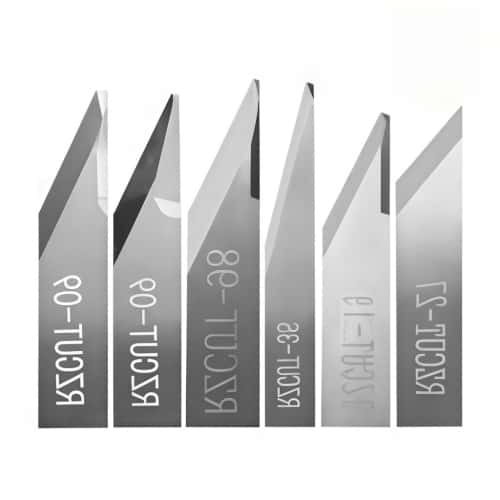
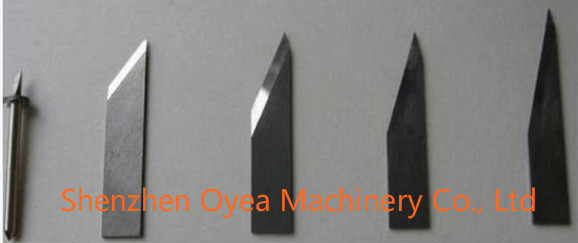
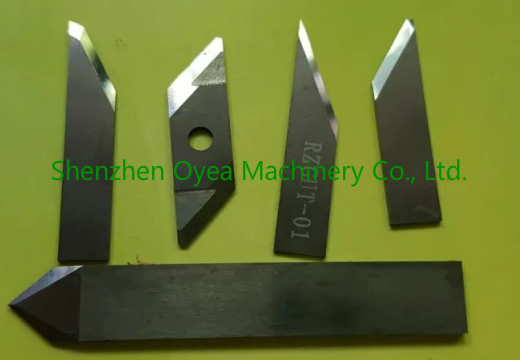

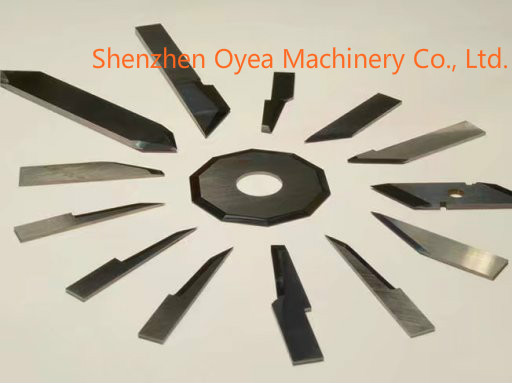


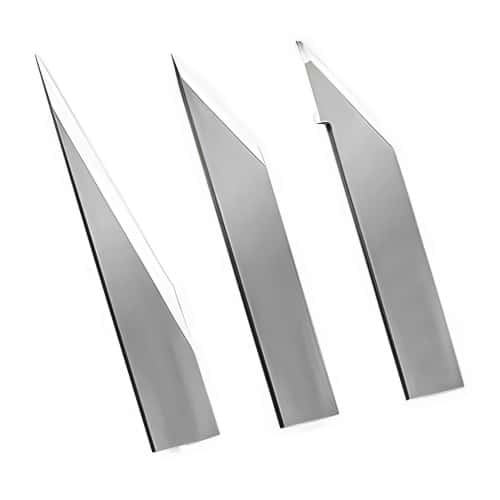
Solid tungsten carbide oscillating (vibration) cutting blades are high-precision industrial tooling engineered for electric oscillating tools (EOT) and pneumatic oscillating tools (POT) on flatbed CNC digital cutters. Their extreme hardness and flexural strength make them ideal for rapid prototyping, sample making, and low-to-medium batch production across high-density or tough flexible substrates.
Material & Carbide Microstructure Standards
For prototype cutting where tools experience rapid directional changes and high impact load from high-frequency vertical strokes (up to 12,000–18,000 strokes/min), carbide grain size and binder composition are critical:
| Specification Parameter | Standard Range / Metric | Engineering Impact |
| Carbide Grain Size | Ultrafine/submicron (0.4 microns - 0.8 microns) | Provides maximum edge sharpness and chipping resistance during reciprocating impact. |
| Cobalt (Co) Content | Adhesive ratio 6% - 10% | Balances high wear resistance ($>92\text{ HRA}$) with necessary fracture toughness against lateral vibration shear. |
| Hardness (HRA / HV) | 91.5 - 93.5HRA | Extends cutting edge lifespan up to $5\times - 10\times$ compared to standard high-speed steel (HSS). |
| Surface Finish | Mirror polishing (Ra < 0.1 μm) | Reduces friction and material adhesion (melts/gunk) on synthetic or sticky materials. |
-
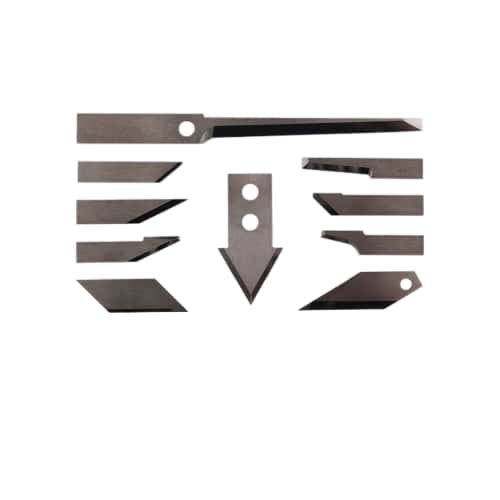
Single-Edge Pointed Blades :(Thickness 0.63 mm - 1.5 mm): Designed for prototyping with fine contours, sharp inner corners and small radii on materials such as folded cardboard, padding materials and leather.
-
Double-Edge Oscillating Blades: Symmetric cutting geometry allowing bi-directional stroke cutting to maximize speed in straight runs and wide arcs.
-
Serrated / Wave-Edge Blades: Ideal for fibrous or layered prototype composites (e.g., carbon fiber prepreg, fiberglass, dense acoustic felt) to prevent material slippage under high stroke speeds.
-
Long stroke/heavy-duty blades (up to 120 mm in length): High-rigidity shank design, specifically designed for thick foam pack inserts, corrugated plastics, and thick honeycomb panels.
Key Performance Factors for Prototype Cutting
-
Stroke Frequency vs. Feed Rate Matching: Ensure that the machine's stroke range is matched to the material thickness. Higher stroke speeds and smaller displacements (1 mm - 2 mm) result in cleaner edges on thin, hard media, while pneumatic tools (4 mm - 8 mm stroke) are suitable for handling high-density foam.
-
Deflection Prevention: Solid tungsten carbide has high elasticity modulus, preventing blade deflection on thick multi-layer prototypes to maintain true $90^\circ$ vertical edge geometry.
-
Underlay Mat Clearance: Precision depth calibration is essential—contact with steel vacuum tables or improper cutting mat clearance will chip micrograin carbide tips instantly.

© 2026 Shenzhen Oyea Machinery Co., Ltd. All Rights Reserved 


Call us now!