

Product Categories
- Atom Cutter Cutting Knives Knife Blades For Sale
- Axyz Cutter Cutting Knives Knife Blades For Sale
- Aristo Cutter Cutting Knives Knife Blades For Sale
- Blackman & White Cnc Knives Knife Blades For Sale
- Bullmer Cutter Cutting Knives Knife Blades
- Colex Cutter Cutting Knives Knife Blades For Sale
- Colex Milling & Router Bits For Sale Shop Online
- Comelz Cutter Cutting Knives Knife Blades For Sale
- Comagrav Cnc Knives Knife Blades For Sale Shop
- Esko Kongsberg End Mill Cutters And Router Bits
- Esko Kongsberg Cutter Cutting Knives Knife Blades
- Eastman Cnc Knives Knife Blades For Sale Shop
- Ecocam Tangential Knives Knife Blades For Sale
- Elitron Cnc Knives Knife Blades For Sale Shop
- Fk Group Cnc Knives Knife Blade For Sale Shop
- Filiz Cnc Knives Knife Blade For Sale Shop
- Gerber Cutter Cutting Knives Knife Blades For Sale
- Humantec Cnc Knives Knife Blade For Sale Shop
- Investronica Cnc Knives Knife Blade For Sale Shop
- Iecho Cnc Knives Knife Blades For Sale Shop Replac
- JingWei JWei Cnc Knives Knife Blades For Sale Shop
- Kawakami Cnc Knives Knife Blade For Sale Shop
- Kuris Cnc Knives Knife Blades For Sale Shop
- Lectra Cnc Knives Knife Blades For Sale Shop
- Multicam Cutter Knives Cutting Knife Blades
- Mimaki Cnc Knives And Plotter Cutter Knife Blades
- RuiZhou Cnc Knives Knife Blades For Sale Shop
- Ronchini Cnc Knives Knife Blades For Sale Shop
- Summa Cutter Cutting Knives Knife Blades For Sale
- Summa End Mill Cutters And Router Bits
- Talamoni Cnc Knives Knife Blade For Sale Shop
- Teseo Cnc Knives Knife Blades For Sale Shop
- Wild Cnc Knives Knife Blade For Sale Shop
- Zund Cutter Cutting Knives Knife Blades For Sale
- Zund End Mill Cutters And Router Bits
- Other Tungsten Carbide Cutting Knives Knife Blades
- Protek Cnc Knives Knife Blades For Sale Shop
- Vinyl Cutter Blades,Plotter Cutting Blades Sale
- Other Cloth Cutting Knife Blades For Sale Shop
- Aluminum End Mill Cnc Router Tools Cutter Bits
- Milling Router Bits Routing Cutters For Sale Shop
- Tungsten Carbide Digital Vinyl Cutter Knife Blades
- Textile Blades,Textile Knives,Non-woven Cutters
- Notching & Punching Tools For Sale Shop
- Paper Cutting Knives Knife Blade For Sale Shop
- Carbide reversible knives,Replacement Tip Turnover
- Conveyor Belts Cutting Underlay Felt Pad For Sale
- Sharpening Disk Grinding Wheels Stones Drums Sale
- Knife for Button Hole Machine,Button Hole Knives
- Valiani Cnc Knives Knife Blades For Sale Shop
- Flatbed Digital Cutting System Tools Accessories
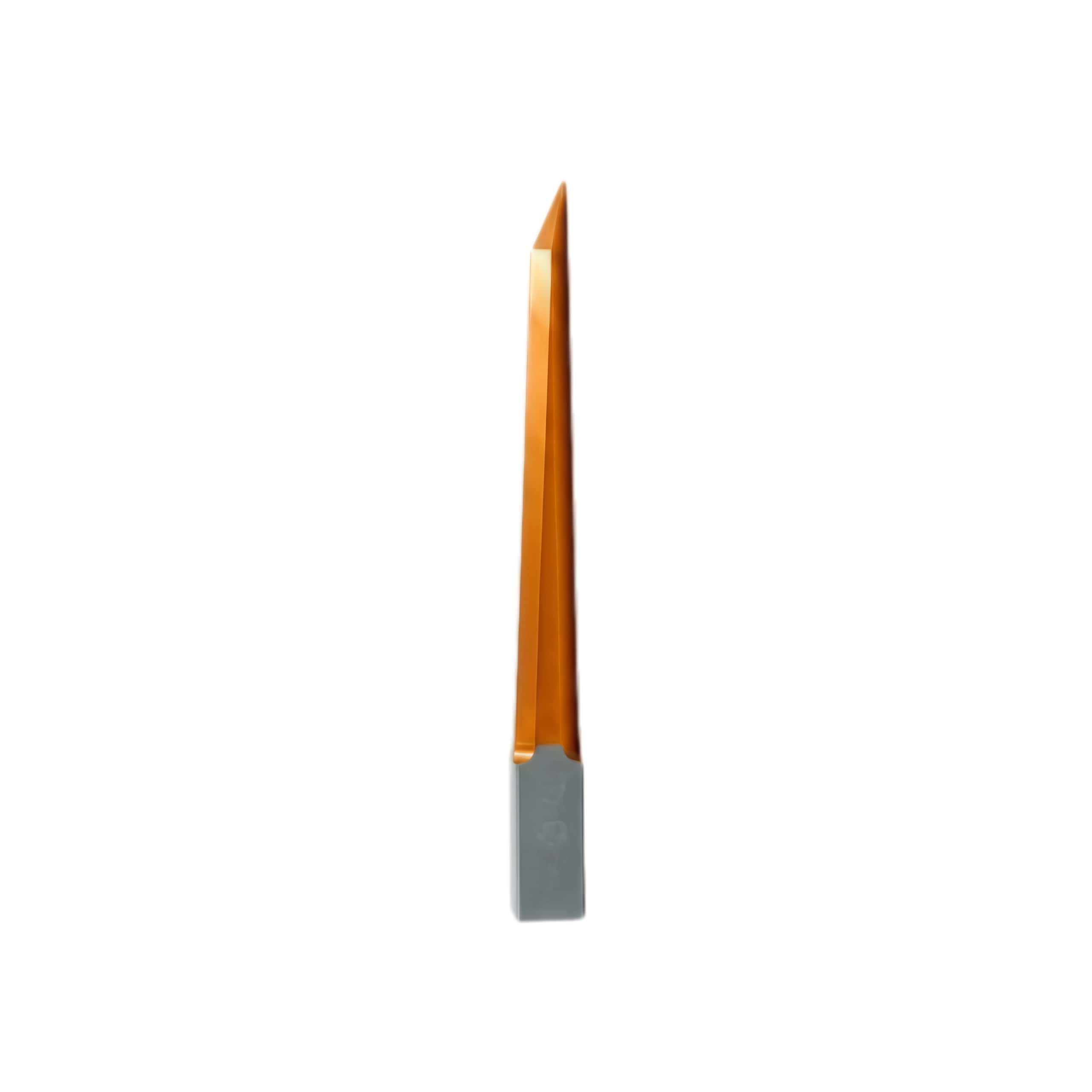


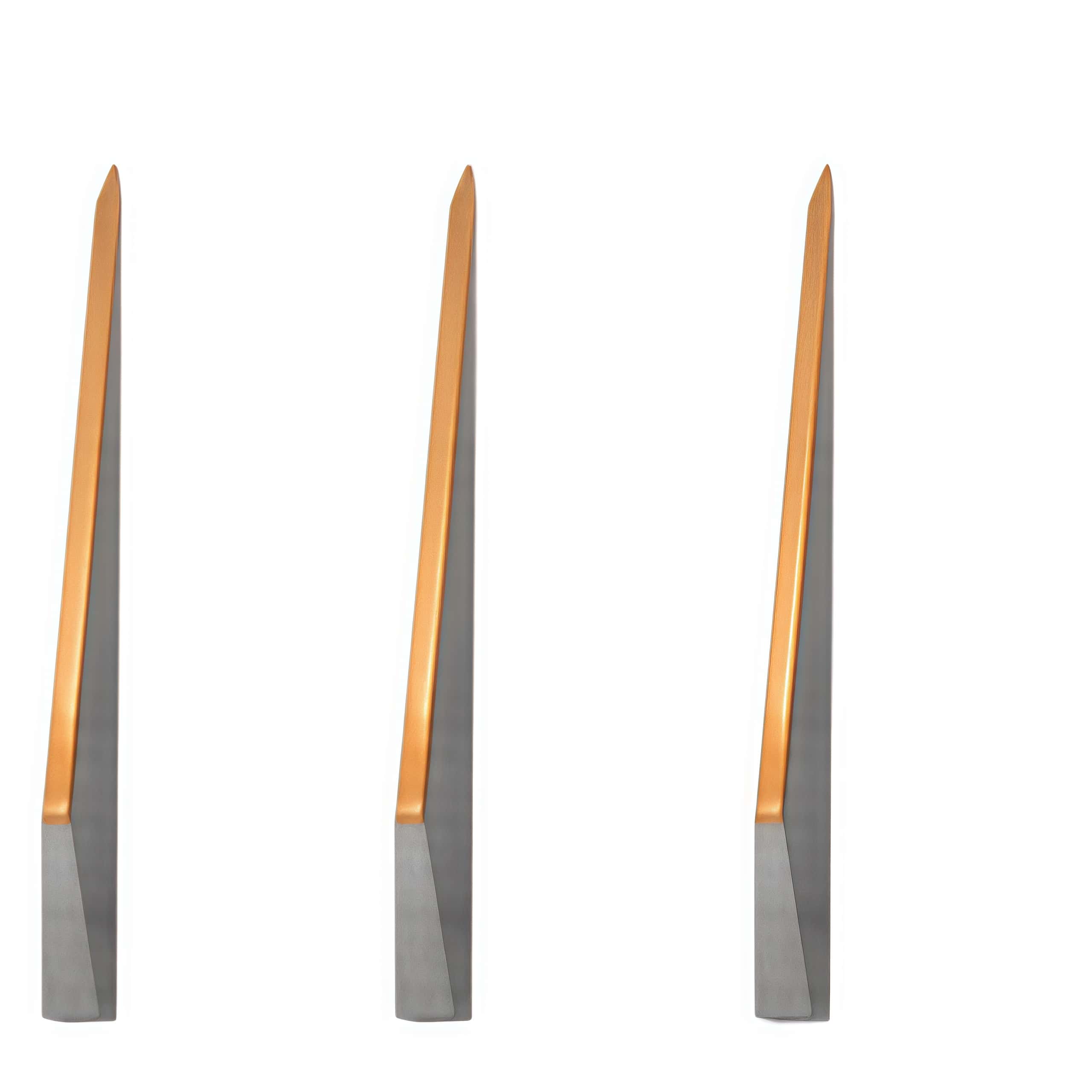
Both inserts are primarily developed for thick, high-density, or highly abrasive industrial soft materials (such as thick foam, heavy-duty gaskets, rubber, etc.).To cope with the intense friction and heat buildup under high-speed vibration, the most mature performance upgrade solution on the market is to use TiN (titanium nitride PVD) gold coating process
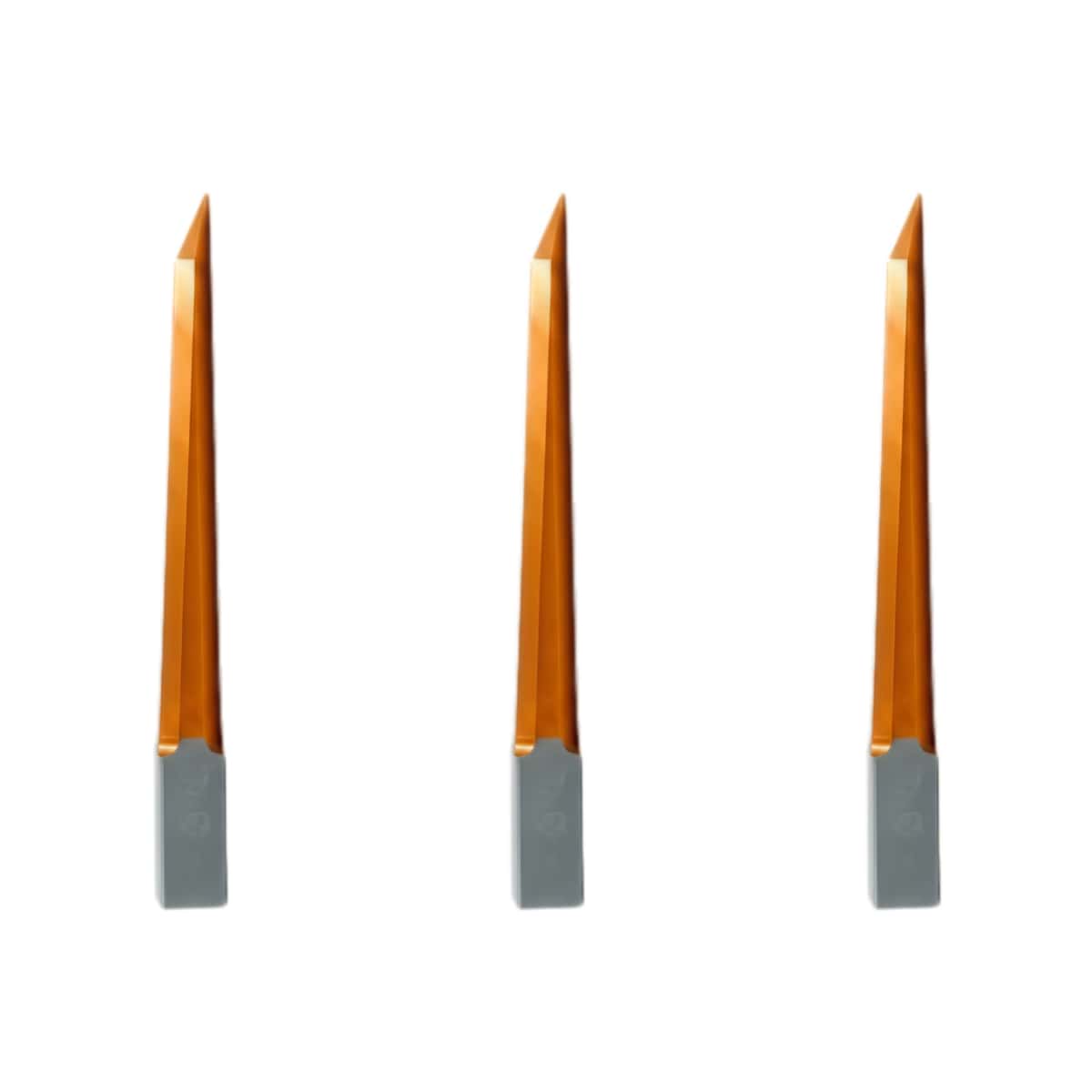
Comparison of core technical parameters and geometric dimensions
Both blades feature a 1.00 mm thick flat shank slot design (optimized for the HV1600 blade holder), but differ in length and maximum depth of cut to accommodate different material thickness requirements:
|
Official code/blade model |
||
|
Belonging to the cutter head system |
||
|
Total Length |
58.00 mm |
63.00 mm (for extended deep materials) |
|
Maximum cutting depth (Max Depth) |
42.00 mm (maximum 43–44 mm) |
47.00 mm (suitable for thicker material interlayers) |
|
Blade width |
5.50 mm |
6.00 mm (Wider, with stronger lateral bending rigidity) |
|
Cutting edge geometry |
65° / 85° |
65° / 87° |
|
Handle clamping specifications |
1.00 mm flat handle |
1.00 mm flat handle |
The stepped advantages of tungsten carbide substrate + TiN coating
When ultrafine tungsten carbide is combined with a TiN (titanium nitride) gold coating , the cutting tool exhibits stronger industrial adaptability during the high-frequency, high-amplitude reciprocating motion of the HV1600 cutting head:
· Wear resistance extended by 2–4 times : The TiN coating has extremely high microhardness (about 30 GPa), which can effectively resist the micro-friction wear on the blade caused by materials such as high-density rubber, composite materials with fiber or glass fiber components, and rigid cardboard.
· Reduced friction and heat (preventing edge melting) : TiN has an extremely low coefficient of surface friction. When cutting EVA foam, polyurethane foam (PUR), or sticky rubber up to 40+ mm thick , the blade will not cause localized melting, sticking, stringing, or charring of the polymer material due to frictional heat, thus maintaining perfect cut quality.
· Improved tip chipping resistance : The 1.00 mm thickened shank, combined with the surface stress of the TiN coating, can significantly absorb the micro-impact generated when cutting into thick pad materials at high frequency, reducing the chance of the fragile tungsten steel tip chipping
© 2026 Shenzhen Oyea Machinery Co., Ltd. All Rights Reserved 


Call us now!