

Product Categories
- Atom Cutter Cutting Knives Knife Blades For Sale
- Axyz Cutter Cutting Knives Knife Blades For Sale
- Aristo Cutter Cutting Knives Knife Blades For Sale
- Blackman & White Cnc Knives Knife Blades For Sale
- Bullmer Cutter Cutting Knives Knife Blades
- Colex Cutter Cutting Knives Knife Blades For Sale
- Colex Milling & Router Bits For Sale Shop Online
- Comelz Cutter Cutting Knives Knife Blades For Sale
- Comagrav Cnc Knives Knife Blades For Sale Shop
- Esko Kongsberg End Mill Cutters And Router Bits
- Esko Kongsberg Cutter Cutting Knives Knife Blades
- Eastman Cnc Knives Knife Blades For Sale Shop
- Ecocam Tangential Knives Knife Blades For Sale
- Elitron Cnc Knives Knife Blades For Sale Shop
- Fk Group Cnc Knives Knife Blade For Sale Shop
- Filiz Cnc Knives Knife Blade For Sale Shop
- Gerber Cutter Cutting Knives Knife Blades For Sale
- Humantec Cnc Knives Knife Blade For Sale Shop
- Investronica Cnc Knives Knife Blade For Sale Shop
- Iecho Cnc Knives Knife Blades For Sale Shop Replac
- JingWei JWei Cnc Knives Knife Blades For Sale Shop
- Kawakami Cnc Knives Knife Blade For Sale Shop
- Kuris Cnc Knives Knife Blades For Sale Shop
- Lectra Cnc Knives Knife Blades For Sale Shop
- Multicam Cutter Knives Cutting Knife Blades
- Mimaki Cnc Knives And Plotter Cutter Knife Blades
- RuiZhou Cnc Knives Knife Blades For Sale Shop
- Ronchini Cnc Knives Knife Blades For Sale Shop
- Summa Cutter Cutting Knives Knife Blades For Sale
- Summa End Mill Cutters And Router Bits
- Talamoni Cnc Knives Knife Blade For Sale Shop
- Teseo Cnc Knives Knife Blades For Sale Shop
- Wild Cnc Knives Knife Blade For Sale Shop
- Zund Cutter Cutting Knives Knife Blades For Sale
- Zund End Mill Cutters And Router Bits
- Other Tungsten Carbide Cutting Knives Knife Blades
- Protek Cnc Knives Knife Blades For Sale Shop
- Vinyl Cutter Blades,Plotter Cutting Blades Sale
- Other Cloth Cutting Knife Blades For Sale Shop
- Aluminum End Mill Cnc Router Tools Cutter Bits
- Milling Router Bits Routing Cutters For Sale Shop
- Tungsten Carbide Digital Vinyl Cutter Knife Blades
- Textile Blades,Textile Knives,Non-woven Cutters
- Notching & Punching Tools For Sale Shop
- Paper Cutting Knives Knife Blade For Sale Shop
- Carbide reversible knives,Replacement Tip Turnover
- Conveyor Belts Cutting Underlay Felt Pad For Sale
- Sharpening Disk Grinding Wheels Stones Drums Sale
- Knife for Button Hole Machine,Button Hole Knives
- Valiani Cnc Knives Knife Blades For Sale Shop
- Flatbed Digital Cutting System Tools Accessories
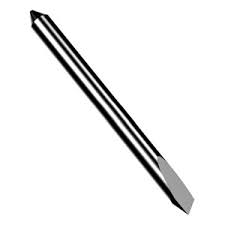
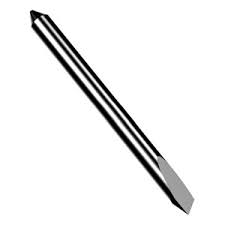
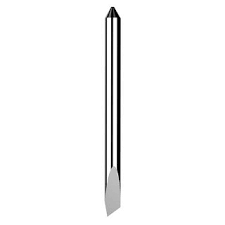
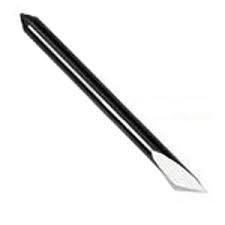


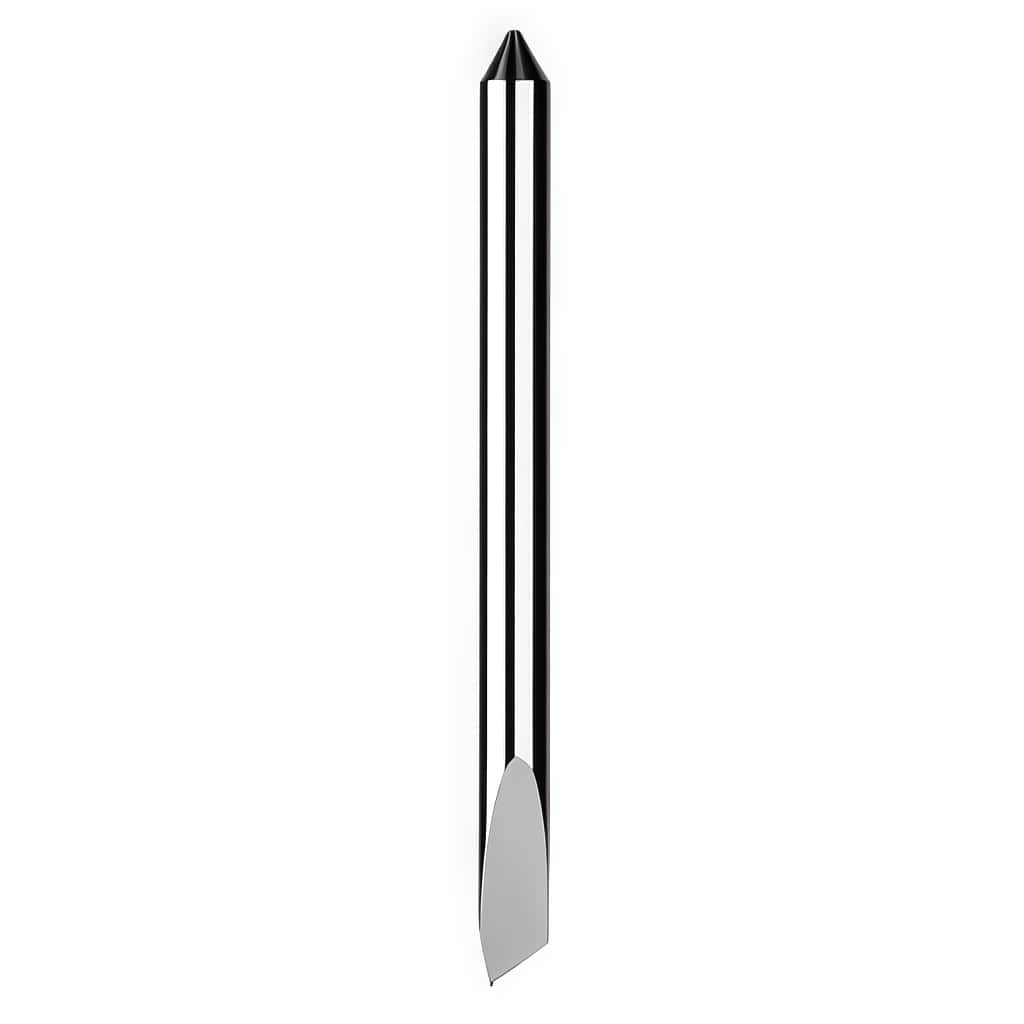
1. The Angle Selection Guide
Like most traditional sign-making plotters, GRI blades are divided by their cutting angles to match varying face-media thicknesses and adhesive densities:
35° to 45° Blades (Standard / All-Purpose): The universal baseline configuration. These are optimized for daily production runs processing standard 2-mil to 3-mil cast and calendered sign vinyl, heat transfer vinyl (HTV) for apparel, and lightweight masking films. They deliver rapid tracking speeds with minimal dragging resistance.
60° Blades (Deep / Heavy-Duty): Ground with a much steeper, more vertical wedge angle. This configuration is required for processing thick or abrasive media (typically 6-mil and higher), such as thick reflective safety films, sandblast stencils, heavy flock, glitter vinyl, and magnetic sheets. The vertical tip profile also prevents tiny fonts or complex decal shapes from lifting off the wax liner mid-cut.
2. Technical Specifications
Material: Premium Sintered Tungsten Carbide . To survive the constant directional twisting and dragging friction across abrasive media sheets, these blades are pressed from micro-grain carbide matrix structures rather than standard steel. This ensures excellent longevity and edge sharpness before experiencing tip wear.
Standard Tool Offset: Typically calibrated around 0.0175 inches 0.44 mm to 0.50 mm within your plotter settings (such as the legacy Summa or GRI machine control parameters).
Cross-Reference Compatibility: Direct substitute for the industry-standard Summagraphics 391-360 blade collection.
3. Sourcing Options
Because these are standard high-turnover production consumables, industrial graphics distributors rarely sell them as single pieces. They are generally cataloged in bulk production sets:
Aftermarket Performance Sets: Industrial supply houses like Shenzhen Oyea provide a robust, long-lasting solution for commercial sign shops looking to maintain precise weeding tracking on older systems.
Specialized Deep Alternatives: For specialized, heavy material runs requiring premium carbide resilience, choices like the CutterPros GAP SC-3300 Carbide Series offer dedicated 35° or 60° options designed to drop cleanly into standard GRI tool collars.
Common Troubleshooting Tip: Is Your Blade Actually Dull?
If you just installed a fresh GRI carbide blade and find it skipping tracks, tearing vinyl corners, or failing to pierce the material cleanly, check the tip for adhesive buildup . Because carbide holds its physical edge for hundreds of yards, the most common failure point isn't a blunt edge—it is sticky adhesive residue migrating from the vinyl face onto the blade tip.
Wiping the tip gently with a lint-free cloth dipped in isopropyl alcohol will instantly clear the buildup and restore a clean, crisp cut path.
Phone Number:+86-18823852826
Email: info@china-oyea.com
1659590865@qq.com
Web: www.china-oyea.com
We warmly welcome every customer to send us drawings for making customized product.
Contact with us ,you will get more than what you can !
© 2026 Shenzhen Oyea Machinery Co., Ltd. All Rights Reserved 


Call us now!