

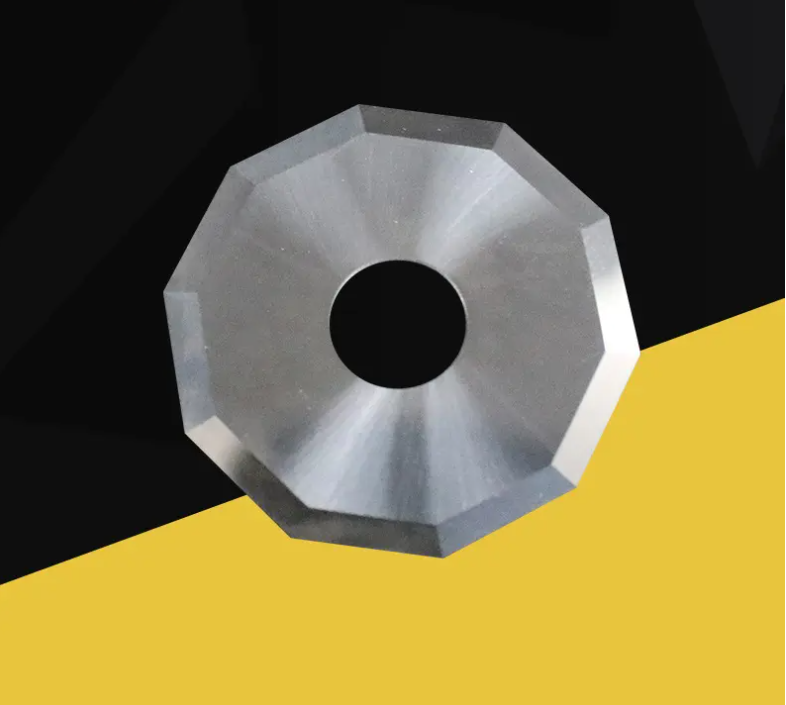
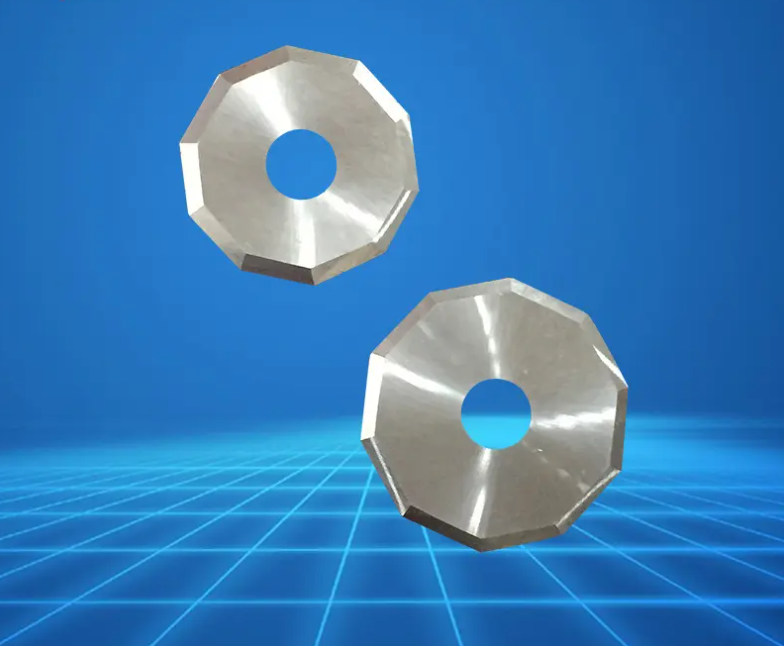
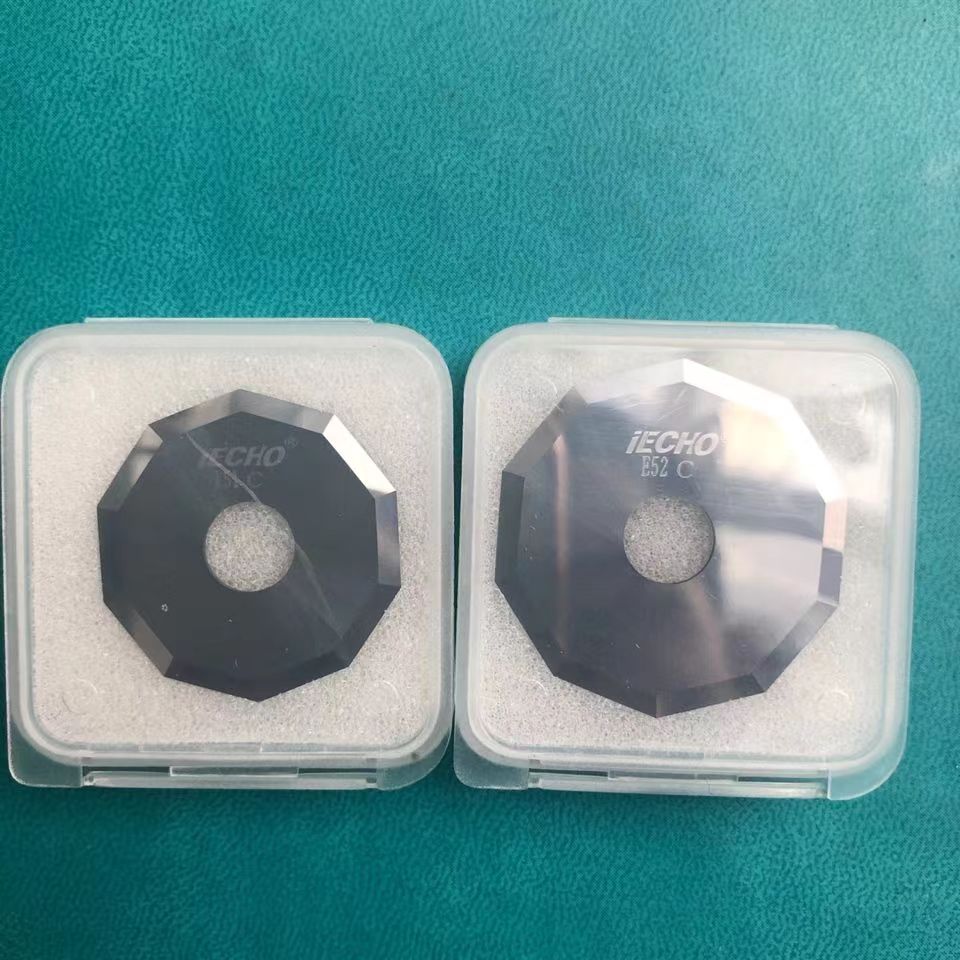
Tungsten carbide circular rotary knife blades are ultra-hard, high-precision industrial cutting tools designed for continuous slitting, slicing, and trimming . Manufactured primarily by mixing tungsten carbide powder with a cobalt binder
Core Technical Specifications
Tungsten carbide rotary blades are characterized by their smooth, toothless, finely honed
- Common Dimensions: Outer diameters range broadly from 25 mm to 60 mm for standard CNC cutters and automated slitting machines, though custom heavy-industrial variants can reach up to 54 inches. Standard thicknesses typically sit between 0.5 mm and 0.63 mm.
- Bore/Arbor Holes: Standard center shanks are typically 8 mm to ensure rigid, low-deflection mounting on high-speed automated equipment.
-
Edge Bevel Geometry:
- Single Bevel (0–10°): Used primarily for dense, rigid materials like heavy laminates, plastics, or copper and aluminum foils.
- Double Bevel (30°): Optimized for cleaner slices through lighter media like paper, packaging, films, and textiles.
Primary Industrial Applications
Because they experience almost zero material deflection and minimal friction under high
- Textiles & Technical Fabrics: Easily slices through abrasive fibers like fiberglass, non-wovens, tarpaulin, and aramid/Kevlar weaves.
- Packaging & Converting: Ideal for high-speed precision slitting of paper rolls, heavy cardboard, corrugated sheets, and adhesive tapes without adhesive buildup.
- Foil & Film Processing: Slices cleanly through micro-thin plastic films, synthetic liners, and non-ferrous metal foils (aluminum/copper) without tearing the edges.
- Medical Manufacturing: Used in cleanroom environments to accurately cut medical dressings, sanitary products, and surgical textiles.
Maintenance & Care Considerations
While tungsten carbide delivers elite wear resistance, its high hardness makes it structurally brittle compared to steel.
- Impact Protection: They should never be subjected to sudden shock, metal-on-metal impacts, or poor machine alignment, which can lead to micro-chipping along the edge.
- Sharpening: Conventional sharpening stones cannot grind tungsten carbide. Restoring a dull edge requires specialized diamond grinding wheels capable of cutting through the ultra-hard carbide matrix.
Blackman & White Tungsten carbide Circular Rotary Knife Blades BW50 BW51 BW52 BW55
Bullmer Tungsten carbide Circular Rotary Knife Blades B50 B51 069717 B52 113072
Comagrav Tungsten carbide Circular Rotary Knife Blades CD25 CD28 CD32 CD66,CD160-10,CD160-20
COLEX Tungsten carbide Circular Rotary Knife Blades T00360 T00362
Esko Kongsberg Tungsten carbide Circular Rotary Knife Blades BLD-RC110 G42444844
Zund Tungsten carbide Circular Rotary Knife Blades Z52 3910337 Z50 3910335 Z51 3910336 Z53 4800059
Summa Tungsten carbide Circular Rotary Knife Blades 500-0862 500-9860 500-9861
MultiCam Tungsten carbide Circular Rotary Knife Blades 003612-MC52-ROTARY 003612-MC51-ROTARY 003612-MC50-ROTARY
Kuris Tungsten carbide Circular Rotary Knife Blades 64111 78559 83906 84559
JWei Tungsten carbide Circular Rotary Knife Blades J374 J373 J371 J375 J379 J376
RuiZhou Tungsten carbide Circular Rotary Knife Blades RZCUT-66 66# RZCUT-67 67# RZCUT-114 114# RZCUT-115 115#
SHARE:


PREV : China Mastering The Basics Of Zund Esko Kongsberg Summa Multicam Cnc Router Drill Bits Milling Cutte NEXT : Jwei J371 J373 J374 J375 J376 J377 J378 J379 J380 J410 J411 J412 Round Knife Blades For Sales Shop