

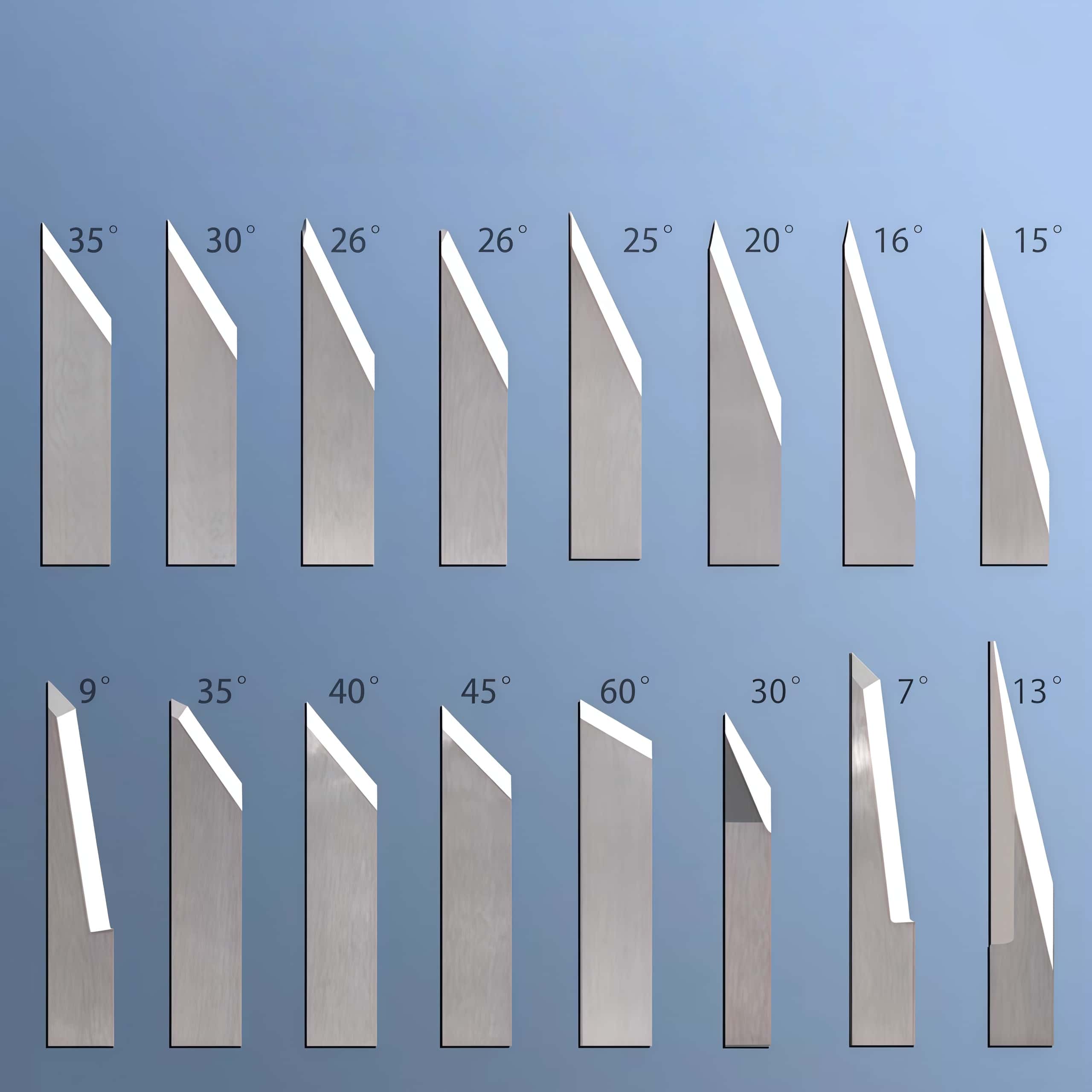
What Is Tungsten Carbide?
Tungsten carbide is a very hard ceramic-like material made from tungsten and carbon. It’s not a pure metal — it’s a composite that’s extremely:
-
Hard (much harder than most tool steels)
-
Wear-resistant
-
Heat resistant
-
Brittle compared with steels
Because of this hardness, tungsten carbide doesn’t bend or deform easily — but it can chip or shatter if misused.
Tungsten Carbide in Blades & Knives
When you hear about tungsten carbide blades/knives, this usually means:
Carbide-tipped Blades
A tool (like a saw blade, router bit, planer knife) where carbide inserts are brazed or mechanically attached to a steel body.
This is extremely common in woodworking and industrial cutting tools.
Examples:
-
Circular saw blades with carbide teeth
-
Planer/jointer knives with carbide tips
-
Router bits with carbide edges
These offer long life and stay sharp longer than plain steel.
Solid Tungsten Carbide Knives
Less common. Tungsten carbide is very brittle compared with steel, so making a full knife out of it isn’t ideal for everyday cutting tasks.
Solid carbide knives exist mostly for:
-
Industrial applications
-
Specific cutting tasks where abrasion is severe (e.g., leather cutting, plastics, composites)
They’re specialty tools, not typical chef or utility knives.
Advantages
Exceptional Wear Resistance
Carbide stays sharp much longer than standard tool steels.
High Heat Tolerance
Good for high-speed cutting where tools heat up fast.
Great for Abrasive Materials
Cuts through materials that dull steel quickly (e.g., composites, laminates, plaster).
Limitations
Brittleness
Carbide can chip or break under shock or twisting loads — unlike steel, it won’t flex.
Difficult to Sharpen
You must use diamond grinding wheels; you cannot sharpen carbide on normal stones.
Cost
Carbide tooling typically costs more than standard steel blades.
Typical Uses
Industrial / Workshop
-
Table saw blades
-
Moulder & jointer knives
-
Router & shaper cutters
-
CNC cutting tools
Specialty Knives
-
High-abrasion cutting (e.g., rubber, composites)
-
Precision trim knives with carbide inserts
Not usually used as everyday kitchen cutlery.
Steel vs. Tungsten Carbide Cutting Edges
| Feature | Tool Steel | Tungsten Carbide |
|---|---|---|
| Hardness | Moderate | Very high |
| Edge retention | Good | Excellent |
| Toughness (shock resistance) | High | Lower |
| Ease of sharpening | Easy | Difficult |
| Cost | Lower | Higher |
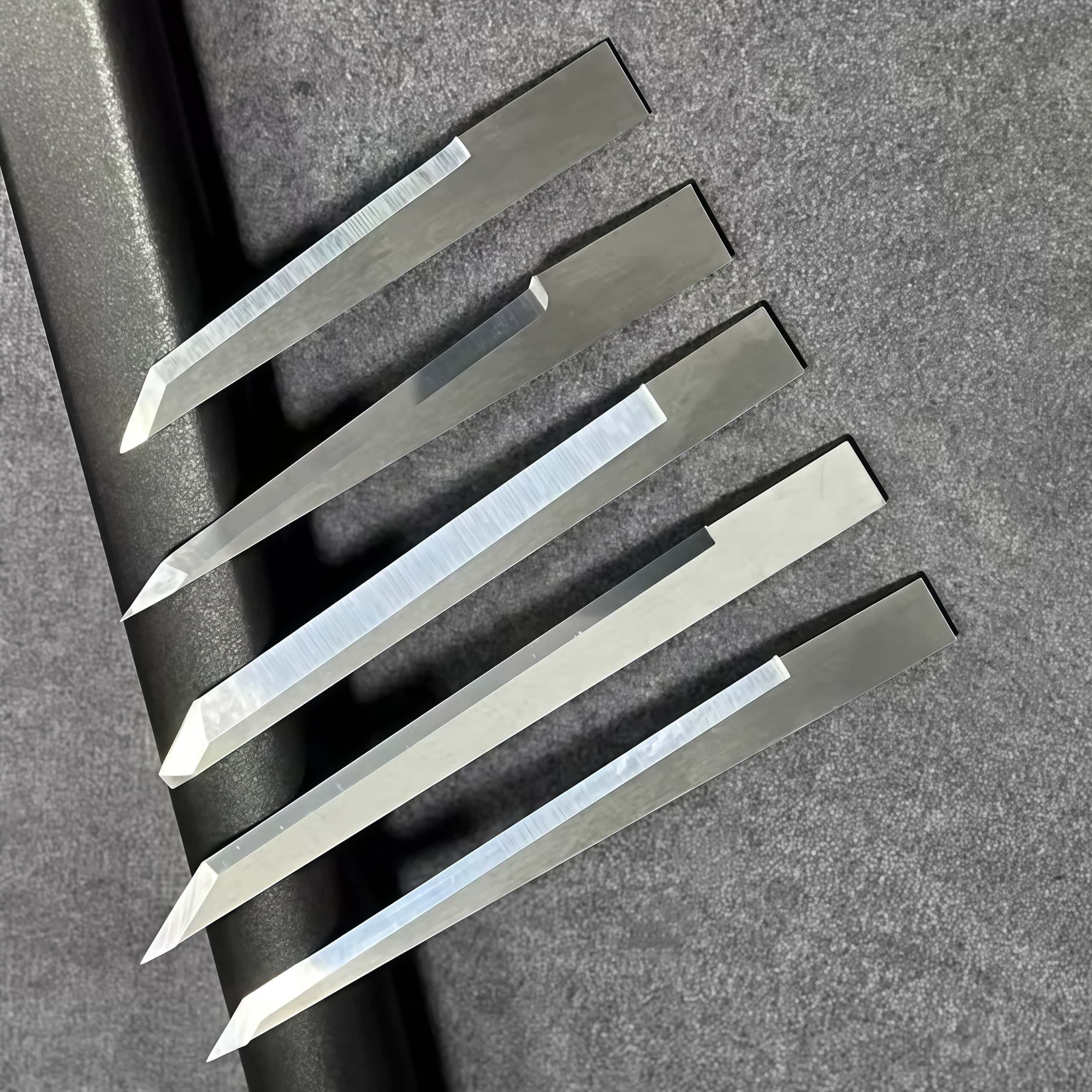
Choosing the Right Blade
Pick carbide-tipped tools when:
✔ you want long life between sharpenings
✔ you’re cutting abrasive or hard materials
✔ you’re using high-speed machinery
Stick with steel blades when:
✔ the work involves shock loads or twisting
✔ you want easy field sharpening
✔ cost is a priority
Safety Tips (Always)
-
Wear eye/ear protection and gloves
-
Ensure blades are securely mounted
-
Don’t use carbide tools on materials that cause binding
-
Replace chipped carbide inserts — don’t try to “bend” them back


PREV : Zund CNC Cutting Knife Blade For Zund Digital Cutter Cutting Systems Flatbed Cutter NEXT : Special carbide blades for Jwei vibrating knife cutting machine