

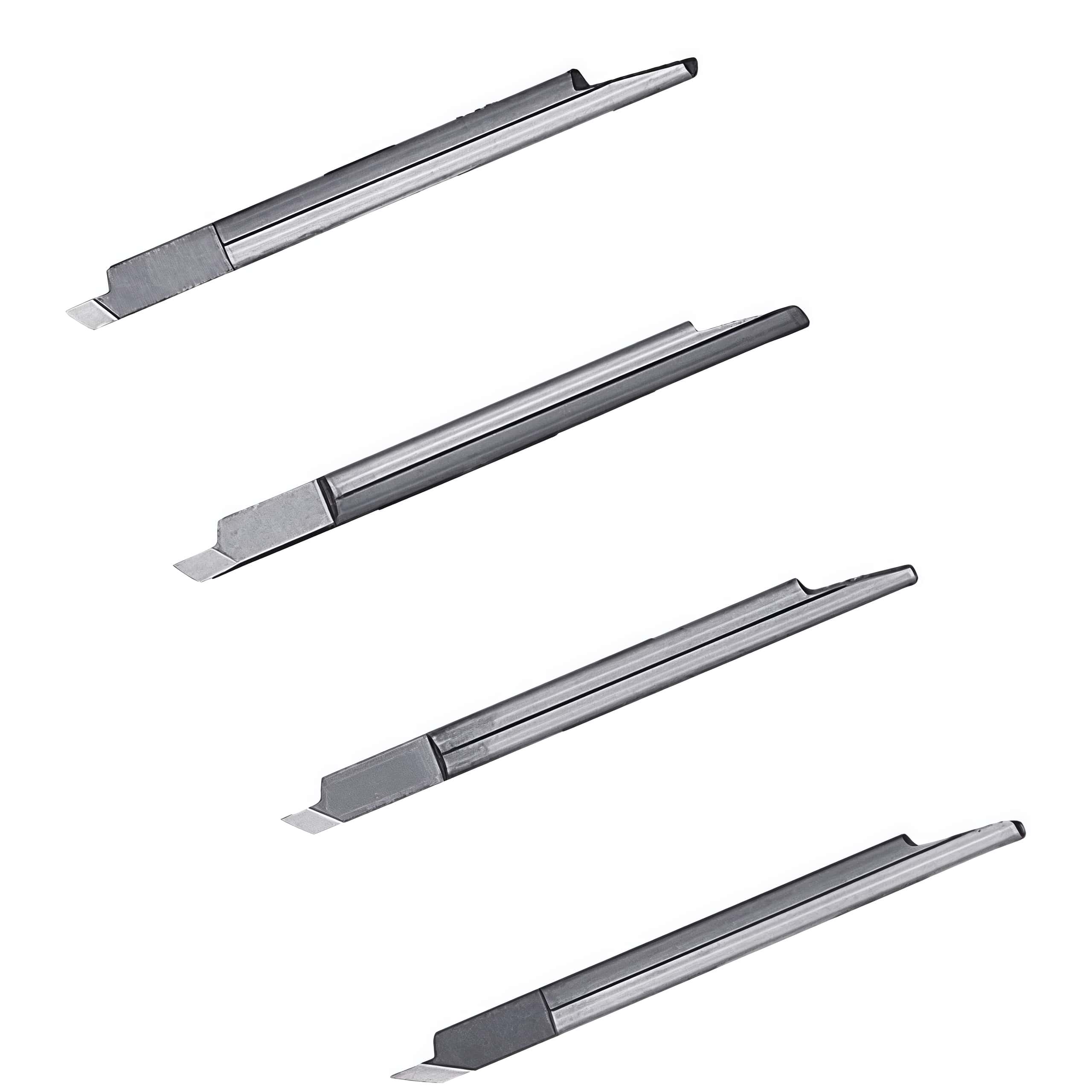
Blade Comparison
1.390-534 Blade:
- Angle: Typically a 36° blade.
- Material Compatibility: Suitable for cutting soft materials like standard vinyl, thin foils, and polyester fabric.
- Cutting Depth: Up to 0.25 mm (10 mil).
- Use Case: Ideal for precise cuts in soft materials.
2. 390-550 Blade:
- Angle: Typically a 60° blade.
- Material Compatibility: Designed for cutting thicker or tougher materials such as sandblast, rhinestone, reflective vinyl film, and cardboard.
- Cutting Depth: Up to 1.2 mm.
- Use Case: Best for materials requiring deeper cuts and precision in thicker or tougher materials.
3. 390-551 and 390-560 Blades:
- Specific details are not provided, but they likely cater to specific material types or thicknesses similar to the 390-534 and 390-550 blades.
Key Differences
- Angle and Material Compatibility: The angle of the blade affects its ability to cut through different materials. A higher angle (like 60°) is better for thicker materials, while a lower angle (like 36°) is more suitable for softer materials.
- Cutting Depth: The 390-550 blade can cut significantly deeper than the 390-534 blade, making it more versatile for thicker materials.
- Precision and Use Cases: Both blades are designed for precision cutting, but the choice depends on the specific material and project requirements.
For precise information about the 390-551 and 390-560 blades, it is recommended to consult Summa's official documentation or contact their customer support.
Additional Tips for Choosing the Right Blade
- Material Thickness: Ensure the blade can handle the thickness of your material.
- Cutting Speed and Pressure: Adjust these settings based on the material type for optimal results.
- Blade Maintenance: Regularly inspect and clean the blade to maintain performance.
SHARE:


PREV : Tungsten Steel Pneumatic Carbide Vibrating Knife Blade Tps Eva Xpe Foam Double Edge Vibrating Knife NEXT : Esko Kongsberg Cutting Tables & Digital Cutters Oscillating Serrated Knife Blades For Sale Store