

Product Categories
- Atom Cutter Cutting Knives Knife Blades For Sale
- Axyz Cutter Cutting Knives Knife Blades For Sale
- Aristo Cutter Cutting Knives Knife Blades For Sale
- Blackman & White Cnc Knives Knife Blades For Sale
- Bullmer Cutter Cutting Knives Knife Blades
- Colex Cutter Cutting Knives Knife Blades For Sale
- Colex Milling & Router Bits For Sale Shop Online
- Comelz Cutter Cutting Knives Knife Blades For Sale
- Comagrav Cnc Knives Knife Blades For Sale Shop
- Esko Kongsberg End Mill Cutters And Router Bits
- Esko Kongsberg Cutter Cutting Knives Knife Blades
- Eastman Cnc Knives Knife Blades For Sale Shop
- Ecocam Tangential Knives Knife Blades For Sale
- Elitron Cnc Knives Knife Blades For Sale Shop
- Fk Group Cnc Knives Knife Blade For Sale Shop
- Filiz Cnc Knives Knife Blade For Sale Shop
- Gerber Cutter Cutting Knives Knife Blades For Sale
- Humantec Cnc Knives Knife Blade For Sale Shop
- Investronica Cnc Knives Knife Blade For Sale Shop
- Iecho Cnc Knives Knife Blades For Sale Shop Replac
- JingWei JWei Cnc Knives Knife Blades For Sale Shop
- Kawakami Cnc Knives Knife Blade For Sale Shop
- Kuris Cnc Knives Knife Blades For Sale Shop
- Lectra Cnc Knives Knife Blades For Sale Shop
- Multicam Cutter Knives Cutting Knife Blades
- Mimaki Cnc Knives And Plotter Cutter Knife Blades
- RuiZhou Cnc Knives Knife Blades For Sale Shop
- Ronchini Cnc Knives Knife Blades For Sale Shop
- Summa Cutter Cutting Knives Knife Blades For Sale
- Summa End Mill Cutters And Router Bits
- Talamoni Cnc Knives Knife Blade For Sale Shop
- Teseo Cnc Knives Knife Blades For Sale Shop
- Wild Cnc Knives Knife Blade For Sale Shop
- Zund Cutter Cutting Knives Knife Blades For Sale
- Zund End Mill Cutters And Router Bits
- Other Tungsten Carbide Cutting Knives Knife Blades
- Protek Cnc Knives Knife Blades For Sale Shop
- Vinyl Cutter Blades,Plotter Cutting Blades Sale
- Other Cloth Cutting Knife Blades For Sale Shop
- Aluminum End Mill Cnc Router Tools Cutter Bits
- Milling Router Bits Routing Cutters For Sale Shop
- Tungsten Carbide Digital Vinyl Cutter Knife Blades
- Textile Blades,Textile Knives,Non-woven Cutters
- Notching & Punching Tools For Sale Shop
- Paper Cutting Knives Knife Blade For Sale Shop
- Carbide reversible knives,Replacement Tip Turnover
- Conveyor Belts Cutting Underlay Felt Pad For Sale
- Sharpening Disk Grinding Wheels Stones Drums Sale
- Knife for Button Hole Machine,Button Hole Knives
- Valiani Cnc Knives Knife Blades For Sale Shop
- Flatbed Digital Cutting System Tools Accessories
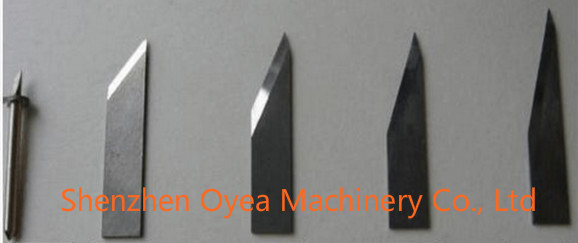
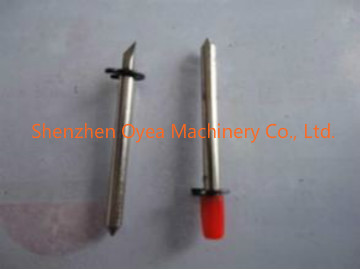
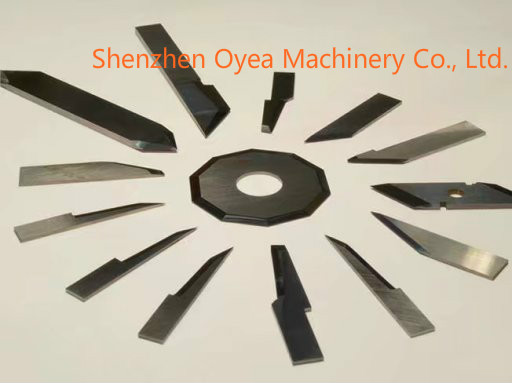


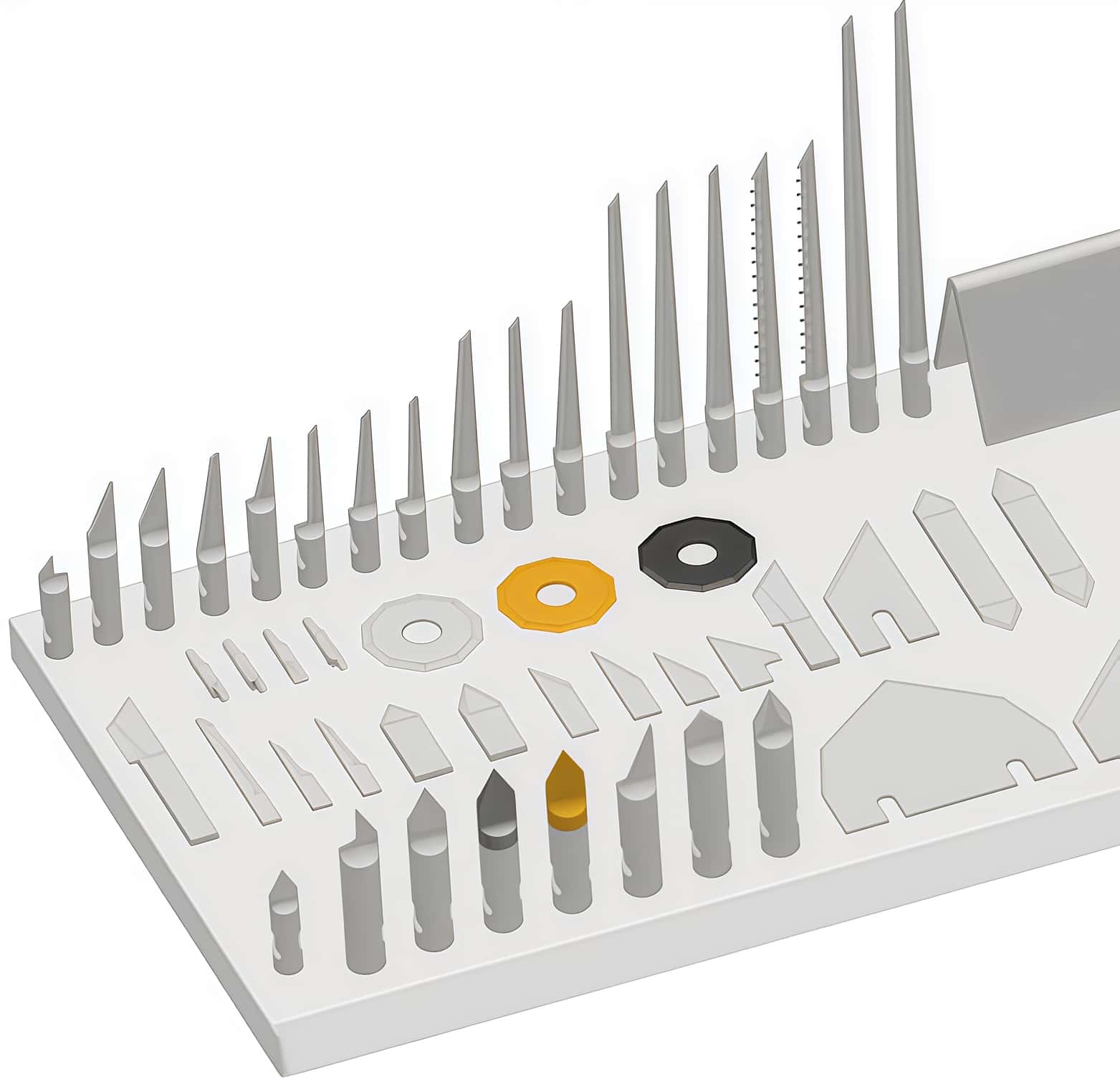
1. Classification of core cutting tools and inserts
Based on the different tool modules equipped on the cutting machine head , the blades are mainly divided into the following four categories:
· Drag Blades / Static Blades
Working principle : The tool itself is not powered. It is driven by the head and rotates and turns naturally in the direction of movement by utilizing the back offset (Lag) between the tool tip and the axis.
Applicable cutting tools : Universal cutting tool (UCT), half-cut/adhesive half-cutting tool (Kiss-Cut).
Typical specifications :Zund Z1,Z2 W6 3mm round shank blade, or Kongsberg RM (Rigid Material)8mm single/double-edged round shank static insert.
Applicable materials : self-adhesive vehicle stickers, lightbox fabric, PVC soft rubber, single-layer paper or thin cardboard.
· Oscillating Blades
Working principle : Driven by electric or pneumatic tools, the blade vibrates up and down at an extremely high frequency (thousands of times per minute), "sawing" the material while moving, like a miniature saw .
Applicable cutting tools : Electric vibratory tools (EOT), pneumatic vibratory tools (POT )Kongsberg VibraCut.
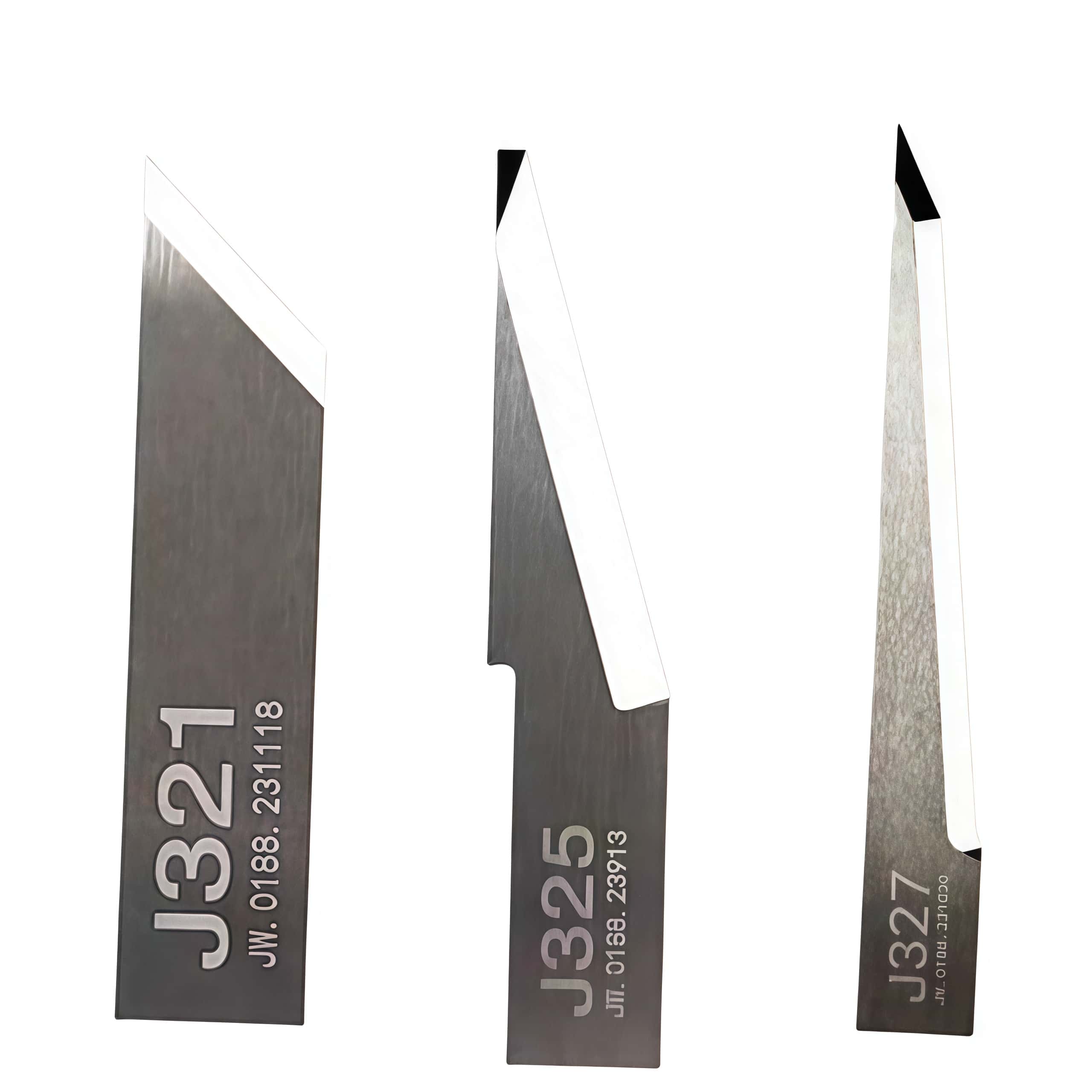
Typical specifications : flat blade structure, such as Zund Z10,Z11,Z16,Z21,Z42.
Applicable materials : corrugated cardboard boxes, honeycomb panels, foamed flame-retardant KT boards, leather, gaskets, and various multi-layer or heavy industrial materials.
· Rotary/Circular Blades
Working principle : The blade is round and rotates continuously by a motor to cut the material in a rolling manner, avoiding fiber fraying or snagging during cutting .
Applicable cutting tools : Driven rotary cutting tools (DRT) or pneumatic rotary cutting tools (PRT).
Typical specifications : Tungsten carbide disc inserts with a diameter typically ranging from 25mm to 32mm, such as...Zund Z50,Z51,Z52.
Applicable materials : woven fabrics, textiles, horizontal cloth, carbon fiber cloth, glass fiber and other soft fibers that are not suitable for cutting with traditional vibrating knives.
V-groove eccentric cutters/bevel blades
Working principle : The blade is mounted on the machine head at a specific angle (such as 15°, 22.5°, 30°, 45°) to cut precise oblique grooves on thick plates.
Applicable materials : Grey board paper, honeycomb paperboard, and corrugated paperboard used for high-end packaging and display racks. After cutting out V-grooves, it can be perfectly folded into a 90° three-dimensional box or structure
2. Comparison of Blades from Common Digital Cutting Machine Brands
To handle the thickness, hardness, and curve detail of various materials, the blades of the cutting machine have extremely strict specifications for the cutting angle, maximum cutting depth, and pre-cut value.
|
Applicable main brand |
Common Original/Compatible Blade Models |
Features and core uses |
|
Zund (Swiss Rigol) |
Flat-blade vibrating knife, extremely versatile, for cutting corrugated paper and cardboard. |
|
|
|
The pointed, flat vibrating knife excels at cutting complex, small arcs, magnetic tape, and hard foam. |
|
|
|
Strong, thick blade with high rigidity, specifically designed for cutting high-toughness carbon fiber and thick leather. |
|
|
BLD-SR6832 (80mm) |
Extremely long stroke, ultra-hard vibrating knife, designed for thick pearl cotton and EPS foam. |
|
|
|
8mm round shank static knife, double-edged, suitable for advertising Forex foamed PVC boards and thick cardboard. |
|
|
Ultra-fine grain tungsten carbide blades developed specifically for domestically produced high-frequency vibrating heads, offering high cost-effectiveness. |
3. Key Technical Parameters for Model Selection
When purchasing or replacing blades for a digital sample cutter, the following parameters should be carefully checked:
1. Shank/Mounting : such as flat 0.63 mm, Ø3 mm round shank, Ø6 mm or Ø8 mm round shank. Must be perfectly matched with the tool chuck.
2. Material : High-quality blades are all made of tungsten carbide/tungsten steel . Premium tungsten steel far surpasses high-speed steel in wear resistance and vibration resistance, making it suitable for high-load continuous operation.
3. Cutting Angle : such as 35°, 54°, 65°, 90°. The smaller the angle , the sharper the blade tip, suitable for fast cutting and small arcs, but the blade tip is prone to breakage; the larger the angle (obtuse angle), the thicker and stronger the blade tip, suitable for hard and rough materials, but overcutting of small arcs will increase significantly.
4. Maximum Cutting Depth : Depends on the material thickness. The actual working cutting depth of the blade must be approximately 0.2mm - 0.5mm greater than the material thickness to ensure complete cut, but not too deep to avoid excessive damage to the felt or conveyor belt below.
© 2026 Shenzhen Oyea Machinery Co., Ltd. All Rights Reserved 


Call us now!