

Product Categories
- Atom Cutter Cutting Knives Knife Blades For Sale
- Axyz Cutter Cutting Knives Knife Blades For Sale
- Aristo Cutter Cutting Knives Knife Blades For Sale
- Blackman & White Cnc Knives Knife Blades For Sale
- Bullmer Cutter Cutting Knives Knife Blades
- Colex Cutter Cutting Knives Knife Blades For Sale
- Colex Milling & Router Bits For Sale Shop Online
- Comelz Cutter Cutting Knives Knife Blades For Sale
- Comagrav Cnc Knives Knife Blades For Sale Shop
- Esko Kongsberg End Mill Cutters And Router Bits
- Esko Kongsberg Cutter Cutting Knives Knife Blades
- Eastman Cnc Knives Knife Blades For Sale Shop
- Ecocam Tangential Knives Knife Blades For Sale
- Elitron Cnc Knives Knife Blades For Sale Shop
- Fk Group Cnc Knives Knife Blade For Sale Shop
- Filiz Cnc Knives Knife Blade For Sale Shop
- Gerber Cutter Cutting Knives Knife Blades For Sale
- Humantec Cnc Knives Knife Blade For Sale Shop
- Investronica Cnc Knives Knife Blade For Sale Shop
- Iecho Cnc Knives Knife Blades For Sale Shop Replac
- JingWei JWei Cnc Knives Knife Blades For Sale Shop
- Kawakami Cnc Knives Knife Blade For Sale Shop
- Kuris Cnc Knives Knife Blades For Sale Shop
- Lectra Cnc Knives Knife Blades For Sale Shop
- Multicam Cutter Knives Cutting Knife Blades
- Mimaki Cnc Knives And Plotter Cutter Knife Blades
- RuiZhou Cnc Knives Knife Blades For Sale Shop
- Ronchini Cnc Knives Knife Blades For Sale Shop
- Summa Cutter Cutting Knives Knife Blades For Sale
- Summa End Mill Cutters And Router Bits
- Talamoni Cnc Knives Knife Blade For Sale Shop
- Teseo Cnc Knives Knife Blades For Sale Shop
- Wild Cnc Knives Knife Blade For Sale Shop
- Zund Cutter Cutting Knives Knife Blades For Sale
- Zund End Mill Cutters And Router Bits
- Other Tungsten Carbide Cutting Knives Knife Blades
- Protek Cnc Knives Knife Blades For Sale Shop
- Vinyl Cutter Blades,Plotter Cutting Blades Sale
- Other Cloth Cutting Knife Blades For Sale Shop
- Aluminum End Mill Cnc Router Tools Cutter Bits
- Milling Router Bits Routing Cutters For Sale Shop
- Tungsten Carbide Digital Vinyl Cutter Knife Blades
- Textile Blades,Textile Knives,Non-woven Cutters
- Notching & Punching Tools For Sale Shop
- Paper Cutting Knives Knife Blade For Sale Shop
- Carbide reversible knives,Replacement Tip Turnover
- Conveyor Belts Cutting Underlay Felt Pad For Sale
- Sharpening Disk Grinding Wheels Stones Drums Sale
- Knife for Button Hole Machine,Button Hole Knives
- Valiani Cnc Knives Knife Blades For Sale Shop
- Flatbed Digital Cutting System Tools Accessories
Axyz Bt-57230 B1031l-30 Kf1-30 Tungsten Carbide Cylindrical Oscillating Knife Blades
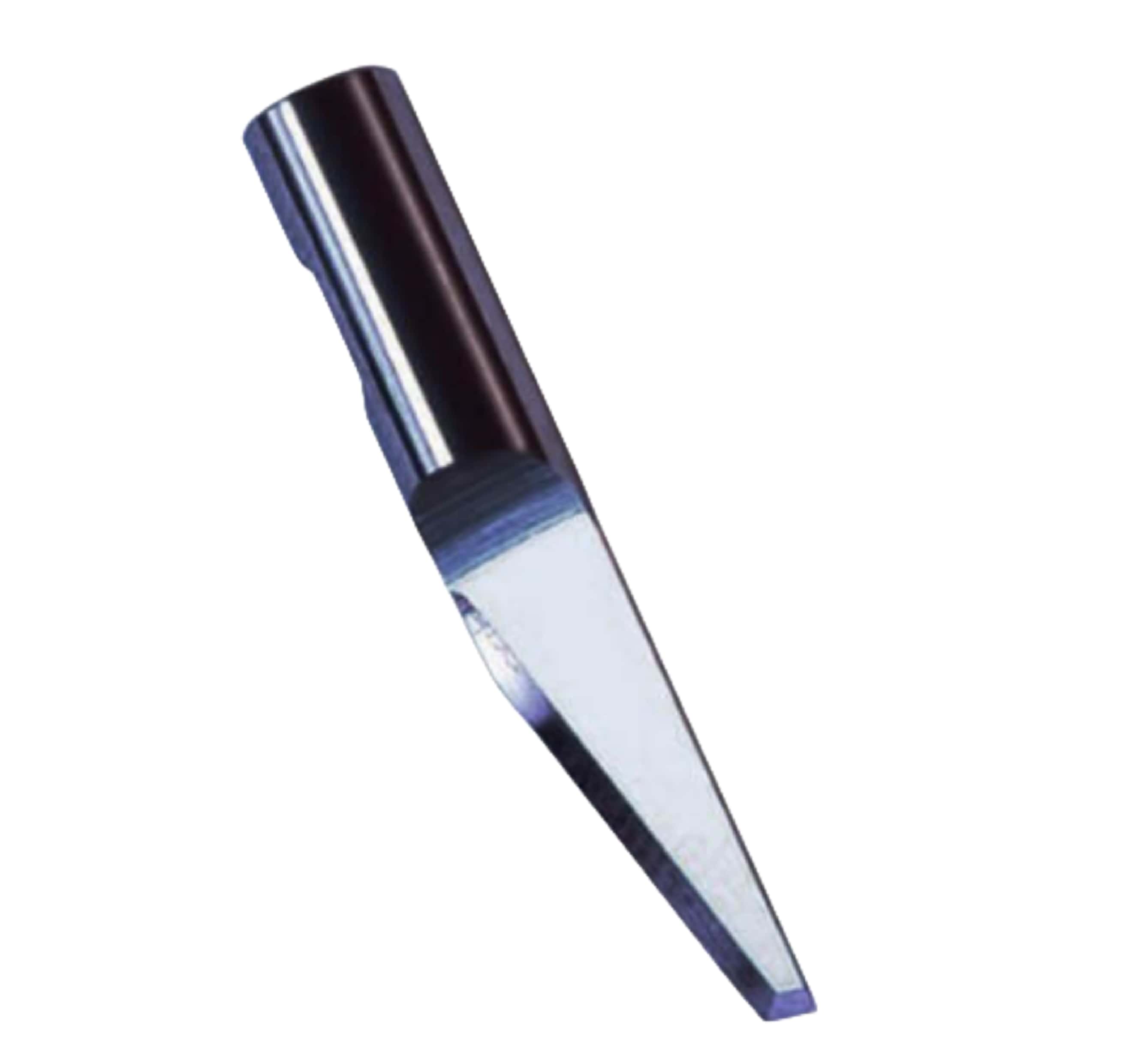
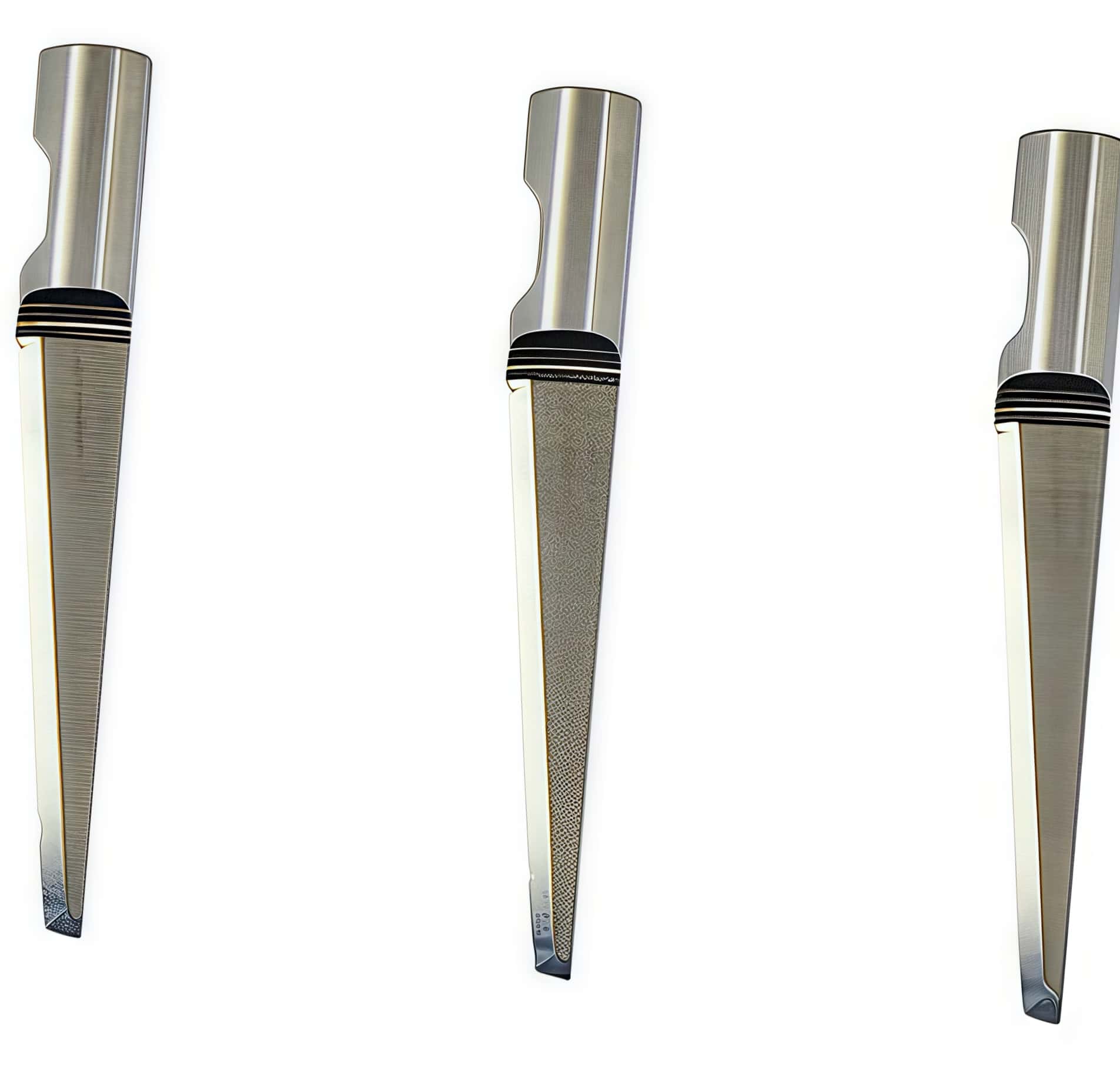
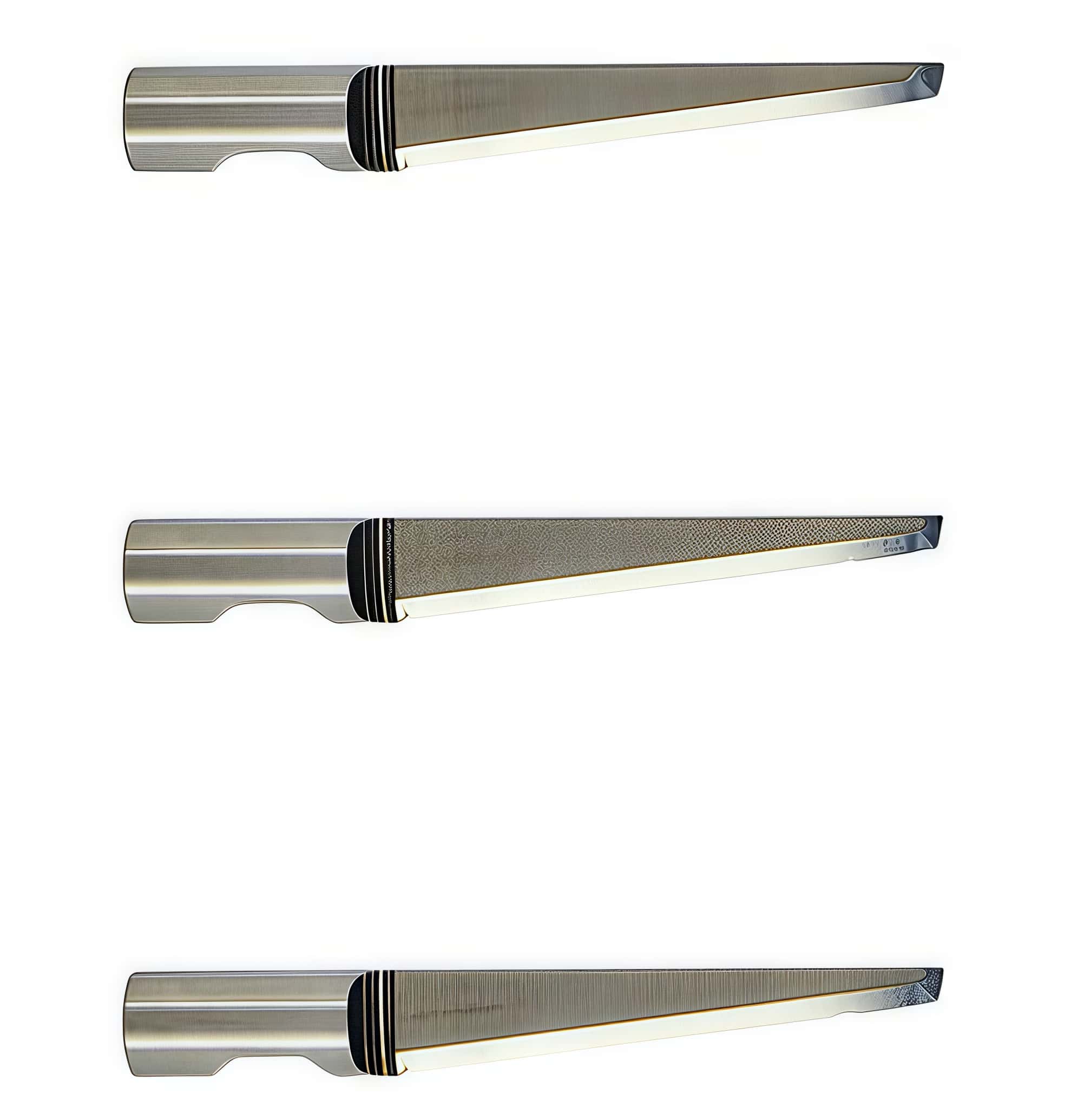
AXYZ B1031L-30 (BT-57230 and KF1-30) is an extra-long, industrial-grade solid tungsten carbide cylindrical oscillating knife blade. It is designed for deep-reach reciprocating cuts on CNC digital finishing tables and flatbed plotters.
Enquire now


Axyz Bt-57230 B1031l-30 Kf1-30 Flat Point Tungsten Carbide Cylindrical Oscillating Knife Blades
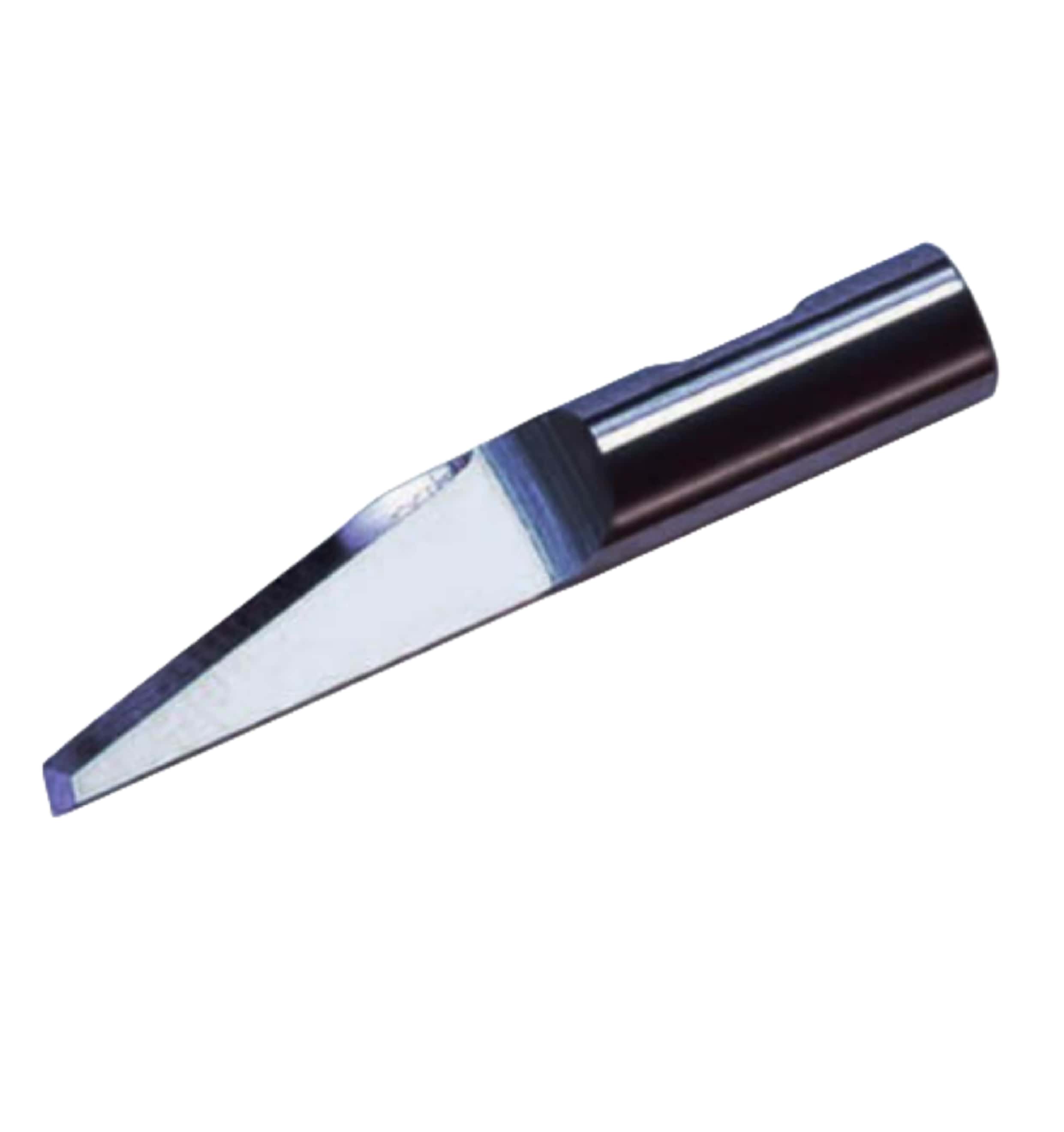
AXYZ B1031L-30 (cross-referenced under part numbers BT-57230 and KF1-30) is an industrial-grade, solid tungsten carbide single-edge, flat-point cylindrical oscillating knife blade. This blade utilizes high-frequency vertical vibration (up-and-down sawing action) to slice cleanly through extra-thick, soft, and highly compressible materials without snagging or dragging.
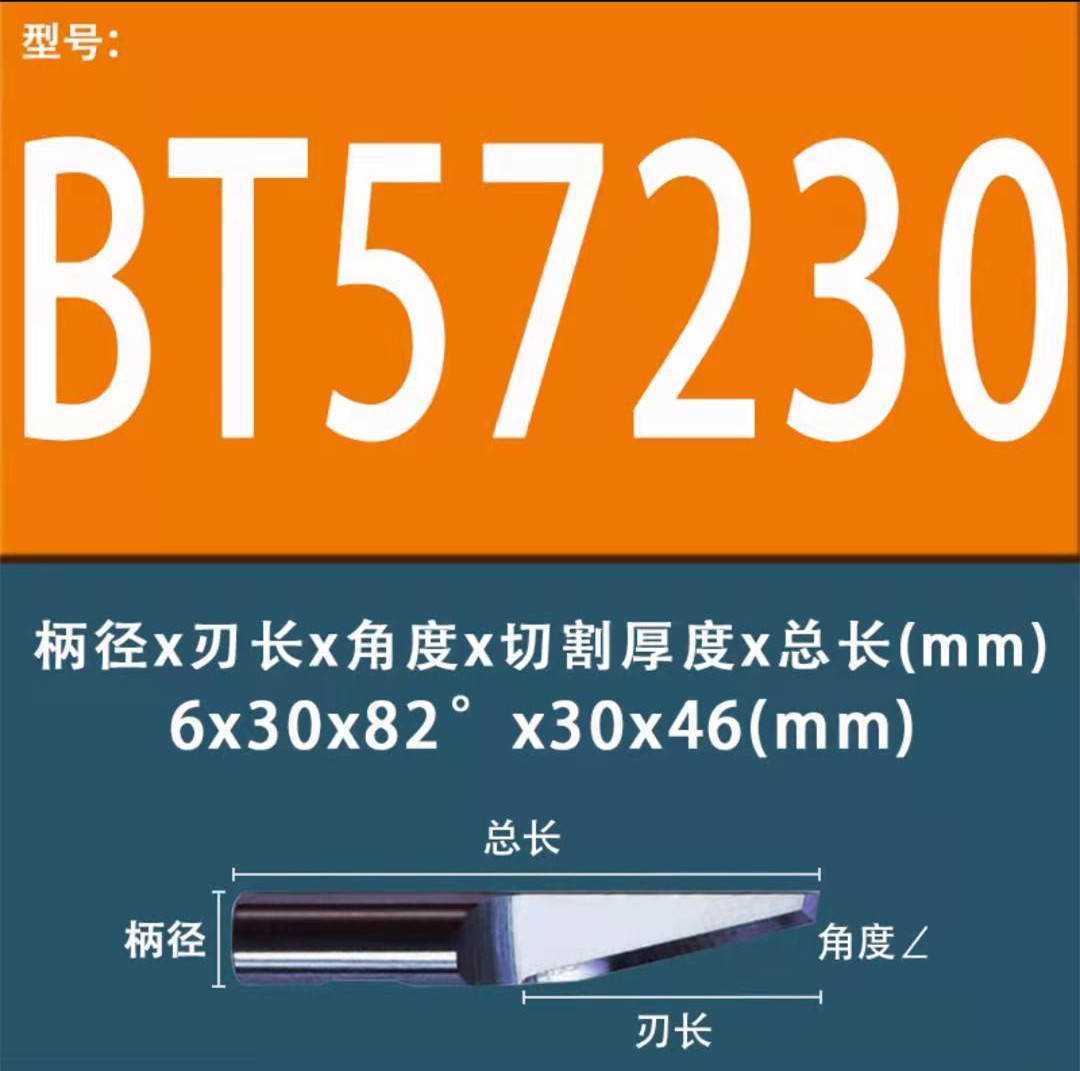
Diameter of the holder: 6 mm
Knife hight: 46 mm
Max. cutting depth: 30 mm
Knife type: Oscillating
Angle: 82,3°
Equivalent to: Summa 500-9831, MultiCam 84-00193-BT-57230, AXYZ B1031l-30
Diameter of the holder: 6 mm
Knife hight: 46 mm
Max. cutting depth: 30 mm
Knife type: Oscillating
Angle: 82,3°
Equivalent to: Summa 500-9831, MultiCam 84-00193-BT-57230, AXYZ B1031l-30
Applications
These blades are primarily used for "sawing" through materials that would otherwise fray or resist standard drag knives, including:
- Foam and Rubber
- Gaskets and Textiles
- Corrugated Plastic and Heavy Cardstock
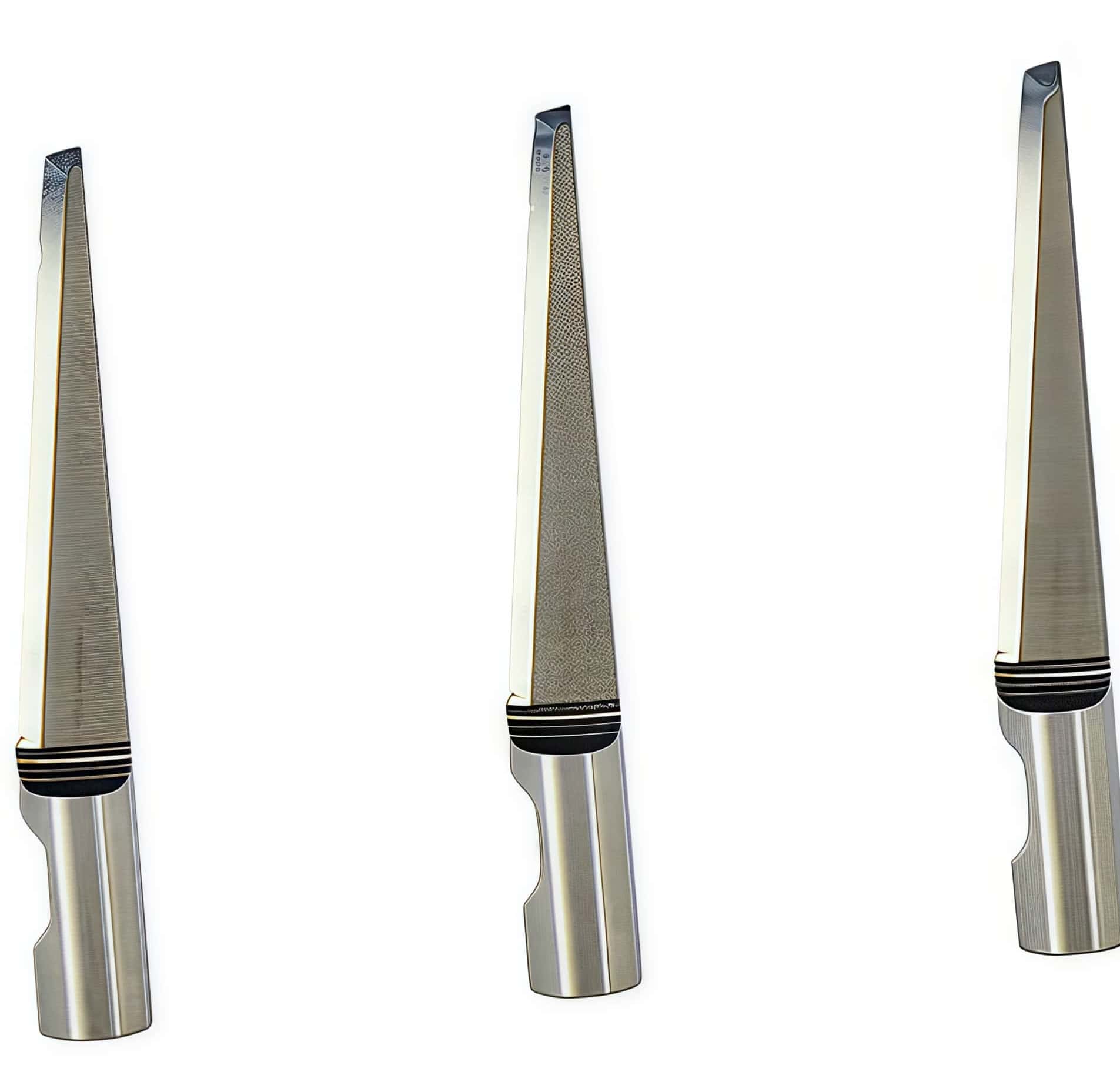
How to correctly select and use Axyz BT-57210 BT-57215 BT-57220 BT-57230 BT-57235 BT-57240 BT-572065 BT-572070 BT-572110 BT-572120 Single Edge Flat Point Carbide Knife Blades
Choosing and operating Axyz BT-572xx series flat-point carbide knife blades correctly requires aligning blade geometry with material thickness and fine-tuning machine parameters to prevent tip breakage.
Step 1: Selecting the Appropriate Blade
Always select the blade based on material thickness, not on the total stroke capacity of the knife head.
Match Cut Length to Material:
- 10 mm – 20 mm (BT-57210, BT-57215, BT-57220): Suitable for thin gaskets, felt, rubber sheet, and dense paperboard. These shorter blades offer optimum rigidity and minimize deflection in tight corners.
- 30 mm – 40 mm (BT-57230, BT-57235, BT-57240): Best for corrugated plastic, medium acoustic felt, closed-cell foam, and carpet.
- 65 mm – 120 mm (BT-572065, BT-572070, BT-572110, BT-572120): Designed for high-density packaging foam, expanded polystyrene (EPS), and thick sound insulation.
Verify Tooling Compatibility: Confirm that your knife head accommodates a 6 mm round shank. These are compatible with Axyz Oscillating Knife Tools (OKT), Tangential Knife Tools (TKT), and similar 6 mm collet systems.
Step 2: Machine Setup & Installation
Proper installation prevents blade vibration, premature dulling, and tip snapping.
1. Inspect Shank and Collet: Perform a prerequisite check by cleaning the 6 mm shank and internal collet sleeve with isopropyl alcohol. Dust or resin accumulation causes runout, which can lead to carbide shattering under high oscillation load.
2. Insert and Torque the Blade: Place the shank into the tool holder until it reaches the correct gauge height. Tighten the retaining set screw or clamping nut according to manufacturer torque specifications. Avoid over-tightening to prevent micro-fracturing solid carbide.
3. Calibrate the Z-Axis (Bottom Dead Center): Accurately zero the Z-axis at the surface of the sacrificial spoil board or cutting mat. Ensure the flat point slightly grazes the mat at its lowest position to avoid chipping the carbide tip.
4. Set Directional Alignment (A-Axis/Tangential): Align the single sharp edge with the cutting direction vector. Ensure tangential control software (e.g., A2MC controller settings) correctly syncs rotation with toolpaths.
Step 3: Operational Best Practices
Oscillation Frequency vs. Feed Rate:
High Feed / High Stroke: Maintain a high oscillation RPM (10,000–12,000) to allow the single edge to cut cleanly without pushing or dragging the material.
Over-feeding Warning: If the blade bends, arcs, or binds on tight curves, reduce forward feed speed or increase oscillation speed.
Cornering & Direction Shifts: Use lift-and-turn (tangential lifting) on sharp 90-degree corners when cutting materials thicker than 20 mm. Dragging a single-edge flat-point through a pivot turn can cause lateral stress and break the carbide spine.
Sacrificial Underlayment: Always cut on a high-density porous knife felt or sacrificial cutting mat. Never allow solid carbide to contact a metal vacuum bed.
Cooling & Cleaning: Though carbide doesn't heat up as quickly as HSS, sticky rubber or foam adhesive can gum up the blade face. Regularly clean the single edge with a mild solvent to maintain clean cuts.
Choosing and operating Axyz BT-572xx series flat-point carbide knife blades correctly requires aligning blade geometry with material thickness and fine-tuning machine parameters to prevent tip breakage.
Step 1: Selecting the Appropriate Blade
Always select the blade based on material thickness, not on the total stroke capacity of the knife head.
Match Cut Length to Material:
- 10 mm – 20 mm (BT-57210, BT-57215, BT-57220): Suitable for thin gaskets, felt, rubber sheet, and dense paperboard. These shorter blades offer optimum rigidity and minimize deflection in tight corners.
- 30 mm – 40 mm (BT-57230, BT-57235, BT-57240): Best for corrugated plastic, medium acoustic felt, closed-cell foam, and carpet.
- 65 mm – 120 mm (BT-572065, BT-572070, BT-572110, BT-572120): Designed for high-density packaging foam, expanded polystyrene (EPS), and thick sound insulation.
Verify Tooling Compatibility: Confirm that your knife head accommodates a 6 mm round shank. These are compatible with Axyz Oscillating Knife Tools (OKT), Tangential Knife Tools (TKT), and similar 6 mm collet systems.
Step 2: Machine Setup & Installation
Proper installation prevents blade vibration, premature dulling, and tip snapping.
1. Inspect Shank and Collet: Perform a prerequisite check by cleaning the 6 mm shank and internal collet sleeve with isopropyl alcohol. Dust or resin accumulation causes runout, which can lead to carbide shattering under high oscillation load.
2. Insert and Torque the Blade: Place the shank into the tool holder until it reaches the correct gauge height. Tighten the retaining set screw or clamping nut according to manufacturer torque specifications. Avoid over-tightening to prevent micro-fracturing solid carbide.
3. Calibrate the Z-Axis (Bottom Dead Center): Accurately zero the Z-axis at the surface of the sacrificial spoil board or cutting mat. Ensure the flat point slightly grazes the mat at its lowest position to avoid chipping the carbide tip.
4. Set Directional Alignment (A-Axis/Tangential): Align the single sharp edge with the cutting direction vector. Ensure tangential control software (e.g., A2MC controller settings) correctly syncs rotation with toolpaths.
Step 3: Operational Best Practices
Oscillation Frequency vs. Feed Rate:
High Feed / High Stroke: Maintain a high oscillation RPM (10,000–12,000) to allow the single edge to cut cleanly without pushing or dragging the material.
Over-feeding Warning: If the blade bends, arcs, or binds on tight curves, reduce forward feed speed or increase oscillation speed.
Cornering & Direction Shifts: Use lift-and-turn (tangential lifting) on sharp 90-degree corners when cutting materials thicker than 20 mm. Dragging a single-edge flat-point through a pivot turn can cause lateral stress and break the carbide spine.
Sacrificial Underlayment: Always cut on a high-density porous knife felt or sacrificial cutting mat. Never allow solid carbide to contact a metal vacuum bed.
Cooling & Cleaning: Though carbide doesn't heat up as quickly as HSS, sticky rubber or foam adhesive can gum up the blade face. Regularly clean the single edge with a mild solvent to maintain clean cuts.
© 2026 Shenzhen Oyea Machinery Co., Ltd. All Rights Reserved 


TALK TO US+86-18823852826
Call us now!
Call us now!
LIVE CHAT
GET IN TOUCH